







What's Happening?
A new study co-led by George Mason University infectious disease expert Amira Roess, PhD, MPH, explores how political, cultural, and economic forces influence the risk of zoonotic diseases in livestock-herding communities. The research, published in 'Social
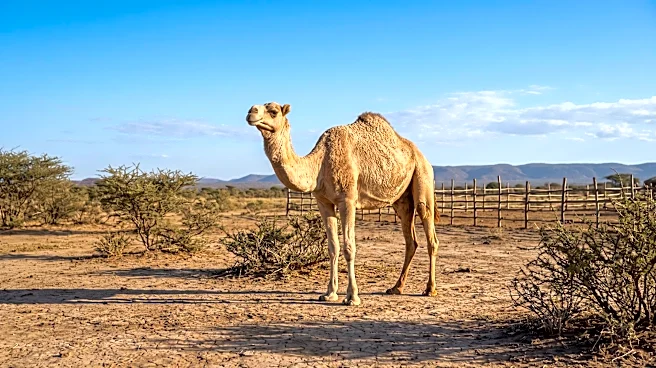
Science & Medicine,' is part of an international collaboration funded by a $2.5 million National Science Foundation grant. The study specifically focused on eastern Ethiopia, where researchers interviewed over 100 individuals involved in camel herding, care, milking, trading, and slaughter. Key factors identified that affect zoonotic disease risk include the close proximity of people and camels, the widespread consumption of raw, unpasteurized camel milk, and how conflict and displacement can force people and livestock into new routes and wildlife preserves. Additionally, trade restrictions and difficulties in accessing export facilities can push more activities into informal markets, which often lack disease surveillance systems. The study emphasizes a 'One Health' approach, integrating human, animal, and environmental health, given that most emerging infectious diseases originate from animals.
Why It's Important?
This research is important because it highlights the complex interplay of societal factors beyond just biological ones in the emergence and spread of zoonotic diseases, which account for the majority of emerging infectious diseases globally. Understanding these broader influences is crucial for developing more effective disease prevention and control strategies. For the U.S., while the study focuses on Ethiopia, its findings underscore the need for comprehensive approaches to global health security. The interconnectedness of global trade and travel means that disease outbreaks anywhere can pose a risk to the U.S. The 'One Health' approach advocated by the study is increasingly recognized as vital for addressing public health challenges, including those that could impact U.S. livestock industries and human populations. By identifying socio-economic drivers of disease, policymakers and public health officials can better anticipate and mitigate potential threats, protecting both animal agriculture and human health within the U.S. and internationally.
What's Next?
The findings from this study are expected to inform future research and policy development in global health and infectious disease prevention. The emphasis on a 'One Health' approach suggests that future initiatives will likely involve greater collaboration between human health, animal health, and environmental sectors. For the U.S., this could mean continued investment in international research collaborations and surveillance systems to monitor zoonotic disease risks globally. Policymakers may consider integrating socio-economic analyses into their disease preparedness plans, recognizing that factors like trade policies and community displacement can significantly impact disease transmission. The study's insights could also lead to more targeted interventions in vulnerable communities worldwide, aiming to reduce the likelihood of future pandemics that could eventually affect the U.S. The ongoing nature of the National Science Foundation grant suggests further research will delve deeper into these complex interactions.
Beyond the Headlines
Beyond the immediate implications for disease control, this study sheds light on the ethical and cultural dimensions of public health interventions. It underscores that effective disease management cannot solely rely on scientific solutions but must also consider the lived experiences, cultural practices, and economic realities of affected communities. For instance, the consumption of raw camel milk, a cultural practice, is identified as a risk factor, suggesting that interventions need to be culturally sensitive and involve community engagement rather than imposing top-down solutions. The study also highlights the long-term shifts in human-animal interactions driven by global challenges like conflict and climate change, which can alter ecological balances and create new pathways for disease transmission. This broader perspective is critical for fostering sustainable health outcomes and preventing future pandemics, emphasizing that global health is intrinsically linked to social justice and environmental stewardship.