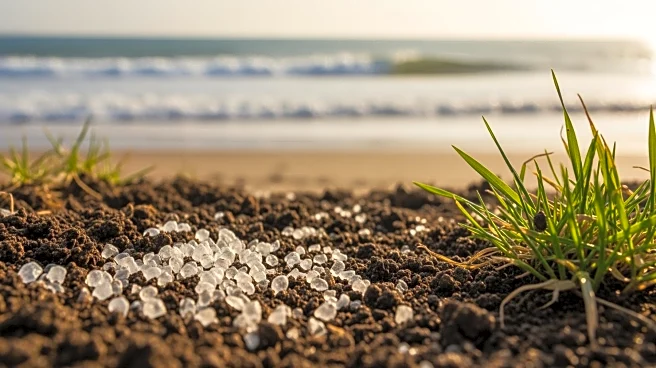




What's Happening?
Researchers at Tokyo Metropolitan University have traced the journey of polymer-coated fertilizers (PCFs) from agricultural fields to ocean beaches. Their study reveals that while only a small fraction of these microplastics return to land through rivers,
a significant amount ends up on beaches when farmland is connected to the ocean by canals. This research highlights beaches as an overlooked 'sink' in the global movement of plastic pollution. PCFs, used extensively in agriculture, are a major source of microplastics, contributing to the environmental challenge of plastic waste in marine ecosystems.
Why It's Important?
Understanding the pathways of microplastic pollution is critical for developing effective strategies to mitigate its impact on marine life and ecosystems. The study underscores the role of agricultural practices in contributing to oceanic plastic pollution, emphasizing the need for improved waste management and alternative agricultural practices. By identifying how PCFs travel from land to sea, the research provides valuable insights into the broader issue of plastic pollution, which poses significant threats to marine biodiversity and human health. This knowledge is essential for policymakers and environmental organizations working to address the global plastic crisis.