







What's Happening?
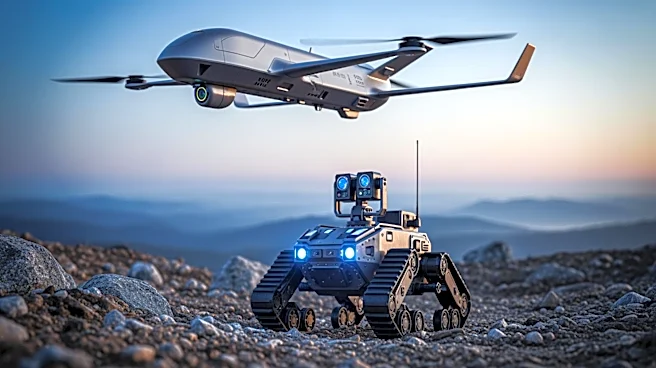
Ukraine is employing a combination of ground robots and flying drones to bolster its military efforts against Russian forces. According to a report, these ground robots, equipped with heavy weapons such as machine guns and grenade launchers, are being
used alongside drones to increase combat effectiveness. The Ukrainian company DevDroid, which manufactures these robotic systems, highlights the synergy between aerial and ground units, allowing for more strategic and powerful attacks. The ground robots can carry heavier payloads and are used for direct assaults, while drones provide reconnaissance and targeting capabilities. This approach is part of Ukraine's strategy to minimize human casualties by replacing soldiers in high-risk operations with robotic systems.
Why It's Important?
The integration of robotic systems in military operations represents a significant shift in warfare tactics, potentially reducing human casualties and increasing operational efficiency. For Ukraine, which faces a numerically superior Russian military, leveraging technology to enhance combat capabilities is crucial. The use of robots and drones allows Ukraine to conduct operations that would be too dangerous for human soldiers, thereby preserving manpower. This development also underscores the growing importance of unmanned systems in modern warfare, which could influence future military strategies globally. The success of these systems could lead to increased investment in robotic warfare technologies by other nations.
What's Next?
Ukraine plans to expand its use of robotic systems, with President Volodymyr Zelenskyy announcing a goal to produce 50,000 ground robots this year. The Ukrainian defense ministry aims to have all front-line logistics managed by robotic systems, reducing the need for human involvement in dangerous tasks. This initiative could lead to further advancements in robotic warfare technology and potentially influence other countries to adopt similar strategies. The ongoing conflict may serve as a testing ground for these technologies, providing valuable insights into their effectiveness and areas for improvement.