






What's Happening?
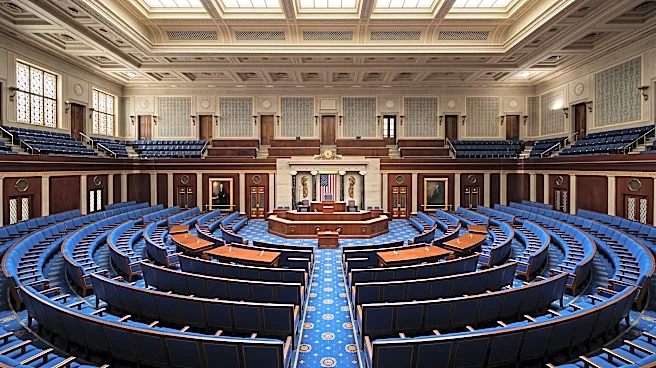
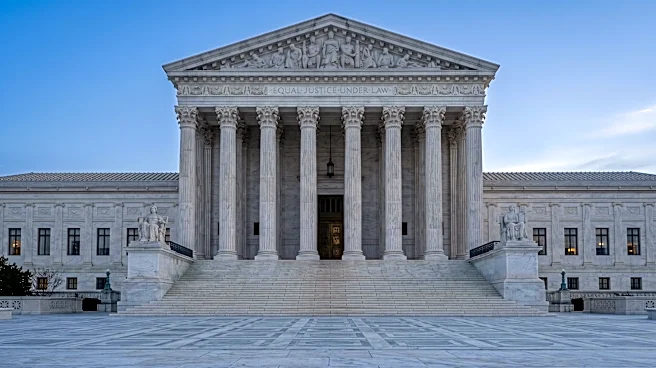
Congressman Mark Harris (NC-08) delivered remarks on the House floor in support of H.J. Res. 1, a legislative proposal to amend the U.S. Constitution to mandate that the Supreme Court be composed of nine justices. Congressman Harris emphasized that this
action is crucial for upholding the Court's legitimacy, protecting the system of checks and balances, and safeguarding the fundamental freedoms of all Americans, irrespective of political power shifts. He expressed concern over the increasing calls to 'pack the Court,' which he views as an attempt to consolidate power and intimidate the judiciary rather than uphold ethical principles or protect individual rights. Harris asserted that the founders designed a system with an independent Supreme Court to serve as a critical safeguard for liberty, ensuring the Court's role is to uphold the Constitution and protect freedom, even when it means diverging from popular sentiment.
Why It's Important?
Congressman Harris's advocacy for a constitutional amendment to fix the number of Supreme Court justices at nine addresses a significant and contentious issue in U.S. politics: the potential for 'court packing.' This debate directly impacts the perceived independence and legitimacy of the judiciary, a cornerstone of the American system of checks and balances. Maintaining a stable number of justices is seen by proponents as essential to prevent future administrations or Congresses from altering the Court's composition for political gain, which could undermine public trust in judicial impartiality. The proposal aims to insulate the Supreme Court from partisan manipulation, ensuring its decisions are based on constitutional interpretation rather than political expediency. The outcome of this legislative effort could have long-lasting implications for the balance of power among the three branches of government and the stability of constitutional law in the United States.
What's Next?
Congressman Harris's remarks signal a continued legislative push to enshrine the nine-justice Supreme Court composition into the Constitution. The next steps would involve H.J. Res. 1 moving through the legislative process in Congress, requiring significant bipartisan support to pass both the House and Senate. If passed by Congress, the proposed amendment would then need to be ratified by three-fourths of the states, a challenging endeavor that typically requires broad national consensus. The debate surrounding this resolution is likely to intensify, drawing reactions from various political leaders, legal scholars, and civil society groups, particularly those with strong opinions on judicial independence and the role of the Supreme Court. The discussion will also likely intersect with ongoing political campaigns and broader conversations about judicial reform and the future of the U.S. legal system.
Beyond the Headlines
The push for a constitutional amendment to fix the number of Supreme Court justices delves into the foundational principles of American governance and the delicate balance of power. It highlights a growing concern about the politicization of the judiciary and the potential erosion of its independence. Historically, the number of Supreme Court justices has been set by Congress, but the idea of 'court packing' has resurfaced during periods of intense political polarization. This debate touches upon the very nature of constitutional interpretation—whether the Constitution should be viewed as a living document adaptable to changing times or as a fixed text whose principles must be strictly adhered to. The long-term implications of such an amendment could either solidify the Court's perceived neutrality or, conversely, be seen by some as an attempt to entrench a particular judicial philosophy, further polarizing the political landscape. It forces a national reckoning with how the U.S. ensures judicial integrity and protects against the weaponization of its highest court.