



What's Happening?
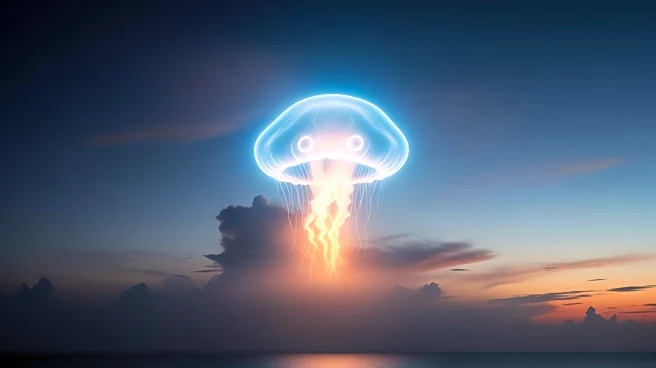
A SpaceX Falcon 9 rocket launch from Cape Canaveral on March 4 created a stunning visual phenomenon known as a 'space jellyfish' in the early morning sky over Florida. The rocket, carrying 29 Starlink satellites, produced a plume that expanded into the upper
atmosphere, illuminated by the Sun, creating a jellyfish-like appearance visible from the ground. This event is part of SpaceX's ongoing efforts to expand its Starlink satellite constellation, which is nearing 10,000 units. The launch marked SpaceX's 28th mission in 2026, highlighting the company's rapid pace in deploying satellites for its broadband internet service.
Why It's Important?
The increasing number of satellites in orbit raises concerns among astronomers about the potential impact on astronomical observations and the visibility of the night sky. The proliferation of satellites can interfere with telescopes, including space-based ones like Hubble, affecting humanity's ability to study the universe. The visual spectacle of the 'space jellyfish' also underscores the growing presence of commercial space activities and their impact on both the environment and scientific research.
What's Next?
As SpaceX continues to launch more satellites, the debate over the regulation and management of space traffic is likely to intensify. Astronomers and policymakers may need to collaborate on solutions to mitigate the impact of satellite constellations on space observation. Additionally, SpaceX's ongoing expansion of its Starlink network will continue to provide global internet coverage, potentially transforming internet access in remote and underserved areas.
Beyond the Headlines
The phenomenon of the 'space jellyfish' highlights the intersection of technological advancement and natural beauty, capturing public imagination and interest in space exploration. It also raises questions about the balance between commercial interests and the preservation of the night sky as a shared human heritage. The visual impact of rocket launches may become a more common feature of life in areas near launch sites, influencing local culture and tourism.