
What's Happening?
New York State's Distractions-Free School Law, also known as the Phone-Free Schools Law, has been in effect for over a year, starting in September 2025. This law, a major initiative of Governor Kathy Hochul,
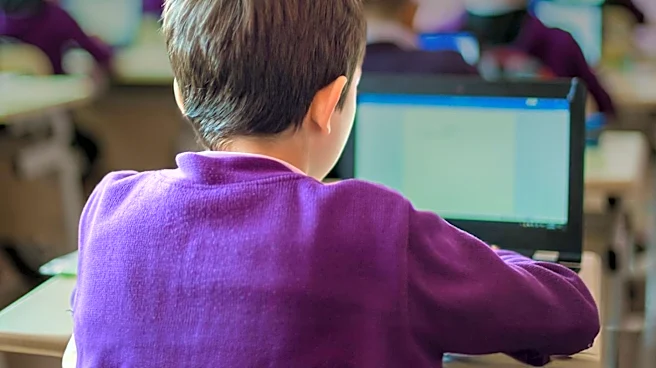
bans students from using smartphones, tablets, smartwatches, or any internet-connected device during the school day. This includes instructional time, homeroom, lunch, recess, and study halls, within school property boundaries. Exceptions are made for specific educational purposes with teacher or principal permission, emergencies, and translation services. The law followed similar bans in several Suffolk County school districts, with Shelter Island being a pioneer. Initial reactions from students on Shelter Island were split, with 37.2% supporting the law and 62.8% opposing it, according to a survey by The Inlet, the Shelter Island School newspaper. However, broader reports from educators and a statewide survey indicate positive outcomes.
Why It's Important?
The implementation of the Distractions-Free School Law in New York State signifies a growing recognition of the negative impact of digital devices on student learning and social development. Reports from various school districts, including Riverhead and Farmingdale, suggest that the ban has led to increased student focus, engagement in classrooms, and more positive social interactions among students. A survey by the New York State United Teachers union showed overwhelming support from educators, who reported students being more 'present and participative during lessons.' This shift could lead to improved academic performance and healthier social environments within schools. The law also reflects a global trend, with a study published in JAMA Pediatrics indicating that over 75% of adults in 35 countries support smartphone bans in schools. This widespread concern highlights the societal challenge of managing technology's role in education and youth development, with potential long-term benefits for mental health and academic outcomes.
What's Next?
The continued success and evaluation of New York's Distractions-Free School Law could influence similar policy decisions in other states and school districts across the U.S. As more data becomes available regarding the long-term effects on student achievement, mental health, and social skills, other educational bodies may consider adopting similar measures. The law's impact on student behavior and academic results will likely be a subject of ongoing research and discussion among educators, policymakers, and parents. Furthermore, the exceptions within the law, such as for educational purposes or emergencies, may be refined based on practical experience and feedback from schools. The global trend favoring such bans suggests that the conversation around screen time in schools is far from over, and New York's experience will serve as a significant case study.
Beyond the Headlines
Beyond the immediate impact on student behavior and academic focus, the Distractions-Free School Law touches upon broader societal implications concerning digital literacy and the balance between technology integration and human interaction. The law implicitly encourages a re-evaluation of how technology is used in educational settings, prompting discussions about digital citizenship and the development of critical thinking skills in an increasingly digital world. It also highlights the ethical considerations of constant connectivity, particularly for developing minds, and the potential for policies to foster environments conducive to deeper learning and genuine social connection. The debate over screen time in schools is not just about distraction; it's about shaping future generations' relationship with technology and ensuring that educational institutions prioritize holistic development over unchecked digital access.