
What's Happening?
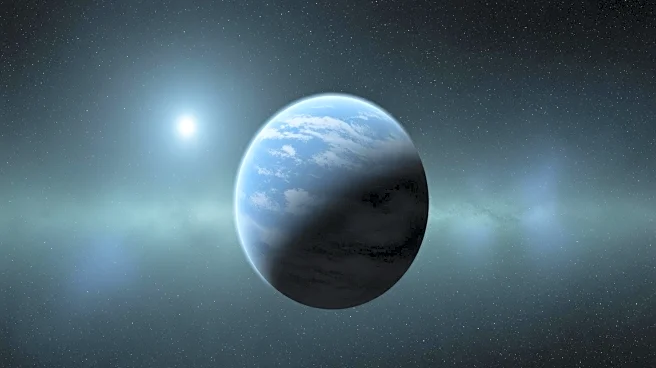
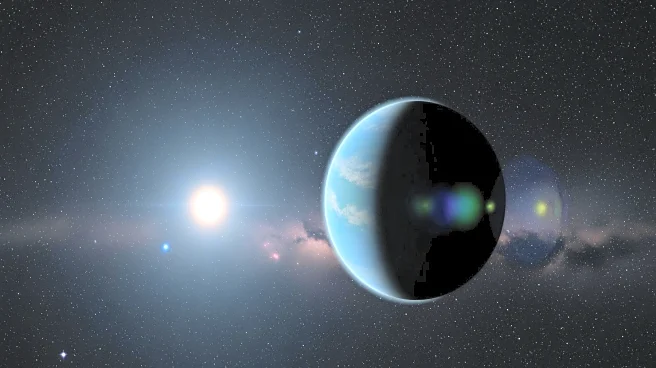
In 2025, astronomers initially believed they had detected signs of life on the exoplanet K2-18b, located 124 light years away, using the James Webb Space Telescope. The excitement centered around the potential
detection of dimethyl sulphide (DMS), a molecule produced by life on Earth. However, subsequent observations and analyses have not confirmed the presence of DMS or any biomolecules in the planet's atmosphere. The only confirmed atmospheric components are methane and carbon dioxide. The initial claim has been retracted, and the scientific community is now focused on understanding the unexplained data spike that led to the initial excitement.
Why It's Important?
The initial claim of detecting life on K2-18b sparked significant interest and debate within the scientific community and the public. The retraction highlights the challenges and complexities involved in exoplanet research and the importance of rigorous verification processes. This incident serves as a learning opportunity for astronomers, emphasizing the need for cautious interpretation of data and the refinement of statistical methods. The event underscores the ongoing quest to find extraterrestrial life and the scientific rigor required to substantiate such claims.
What's Next?
Further observations of K2-18b are planned with the James Webb Space Telescope to investigate the unexplained data spike. These efforts aim to identify the molecule responsible for the anomaly. The scientific community will continue to refine methodologies and definitions used in exoplanet research, enhancing the accuracy of future discoveries. This ongoing research is crucial for advancing our understanding of exoplanetary atmospheres and the potential for life beyond Earth.