


What's Happening?
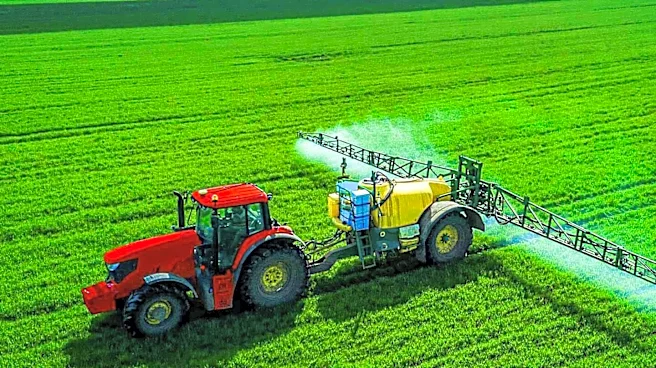
Smart Africa and the Food and Agriculture Organization (FAO) are advancing the use of artificial intelligence (AI) in agriculture across Africa. This initiative aims to move beyond pilot projects to real-world applications, focusing on enhancing agricultural
productivity and food security. The collaboration targets smallholder farmers in countries like Ghana, Kenya, Malawi, and Rwanda, providing them with AI tools to manage climate shocks, pests, and yield predictions. The initiative emphasizes localization, addressing specific needs such as language, connectivity, and cost structures. However, challenges remain, including the need for robust digital infrastructure and farmer education to fully realize AI's potential.
Why It's Important?
The initiative is significant as it addresses critical issues of food security and economic stability in Africa, where agriculture plays a vital role. By equipping smallholder farmers with AI tools, the project aims to improve agricultural productivity, which can lead to enhanced food security and economic growth. African governments stand to benefit from increased political stability and economic development. However, the success of this initiative depends on overcoming infrastructural challenges and ensuring that farmers can effectively use these AI tools. The project also highlights the broader trend of using AI to solve real-world problems in agriculture, health, and disaster management.
What's Next?
In the next 6-12 months, the initiative will focus on deploying localized AI solutions in pilot regions, particularly in proactive countries like Rwanda. Success in these regions could set a template for scaling the solutions across the continent. However, for full-scale deployment, investments in digital infrastructure, farmer education, and regulatory frameworks are necessary. The initiative's success will depend on its ability to address foundational gaps and ensure that smallholder farmers integrate AI tools into their practices for long-term impact.
Beyond the Headlines
While the initiative is promising, it faces challenges such as the need for reliable datasets and the high cost of deploying AI at scale. Overhyping AI's potential could lead to resource misallocation, diverting attention from critical issues like irrigation and transportation. Policymakers must balance technological optimism with realism to ensure sustainable development.