
What's Happening?
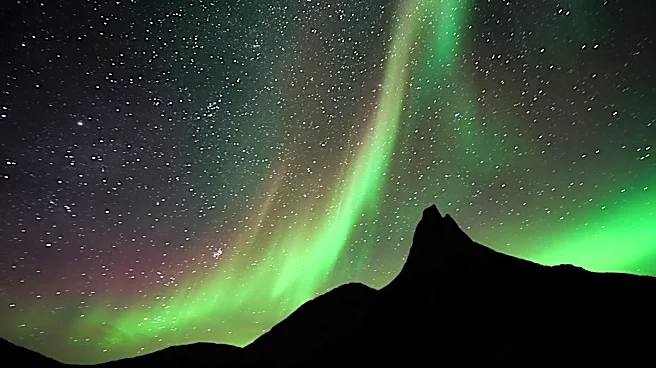
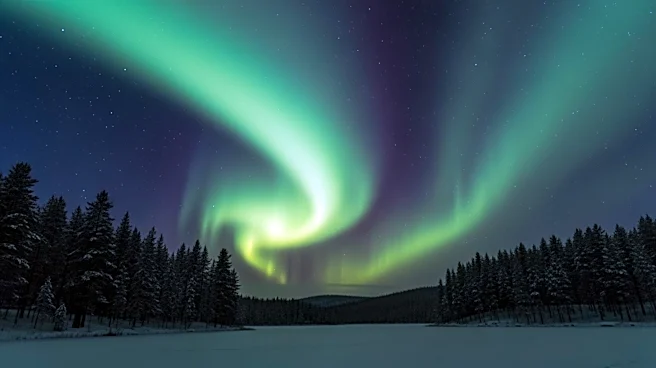
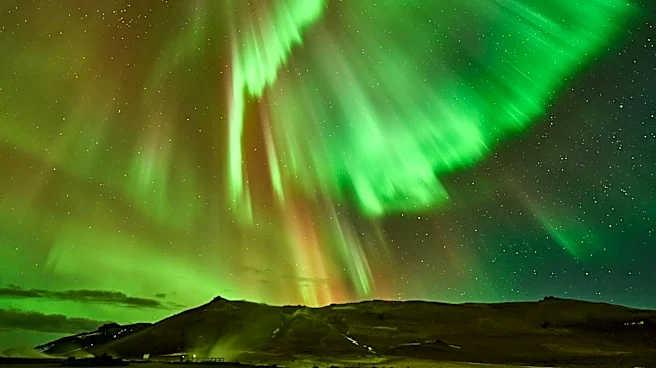
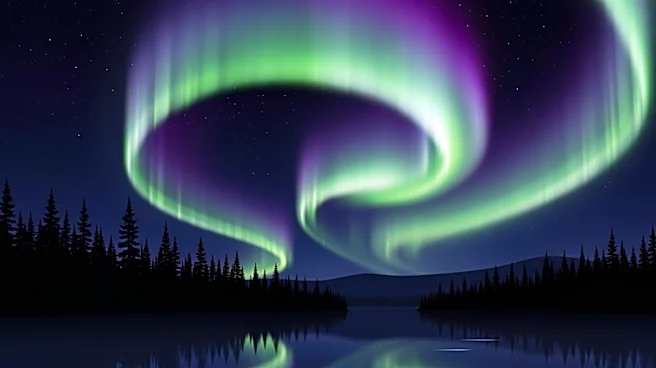
The NOAA's Space Weather Prediction Center has forecasted a geomagnetic storm with a Kp index of 7.00, indicating a strong potential for the northern lights to be visible across 20 U.S. states. This phenomenon
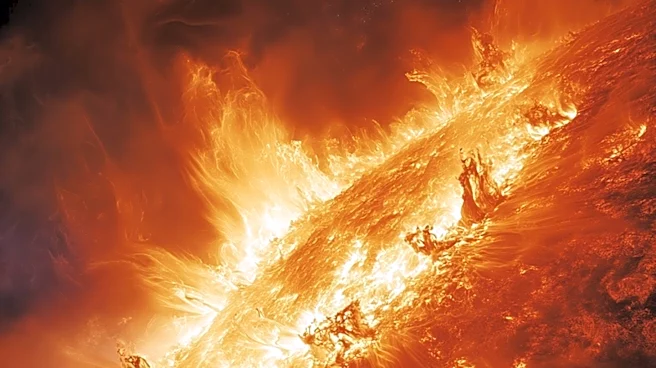
is tied to a coronal mass ejection from the Sun on June 6, which is expected to interact with Earth's magnetic field between June 7 and June 9. The northern lights, typically seen in higher latitudes, may be visible in states such as Washington, Idaho, Montana, and others in the northern tier. Mid-latitude states like Oregon, Wyoming, and Pennsylvania might also catch a glimpse, depending on local conditions such as cloud cover and light pollution. The event is part of a series of geomagnetic activities following Solar Cycle 25's peak in late 2024.
Why It's Important?
The potential visibility of the northern lights in mid-latitude states is a rare occurrence, offering a unique opportunity for millions of Americans to witness this natural spectacle. The geomagnetic storm could also impact radio communications, with a higher likelihood of R1-R2 radio blackouts, affecting pilots and HF-radio users. This event underscores the importance of monitoring space weather, as geomagnetic storms can have broader implications for satellite operations and power grids. The increased frequency of such events during Solar Cycle 25 highlights the need for preparedness in sectors reliant on satellite communications and navigation.
What's Next?
As the geomagnetic storm progresses, real-time updates from NOAA's aurora forecast and other space weather monitoring sites will be crucial for those hoping to view the northern lights. Pilots and radio operators are advised to stay informed about potential disruptions. The event may prompt further studies into the effects of solar activity on Earth's magnetosphere, potentially influencing future space weather forecasting and mitigation strategies.