







What's Happening?
A recent survey conducted in Iowa revealed that a majority of its residents have experienced negative environmental impacts stemming from industrial animal operations, commonly known as factory farms. Iowa is a significant hub for such operations, housing
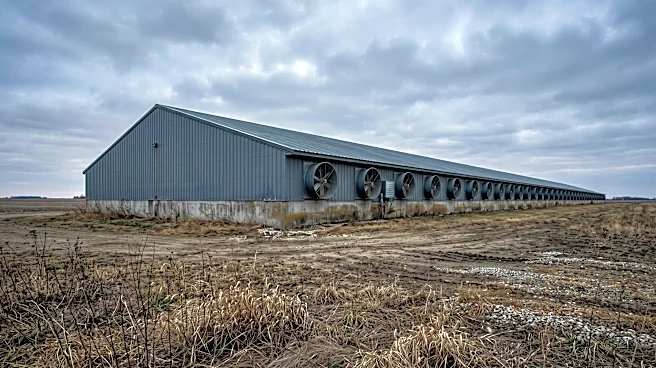
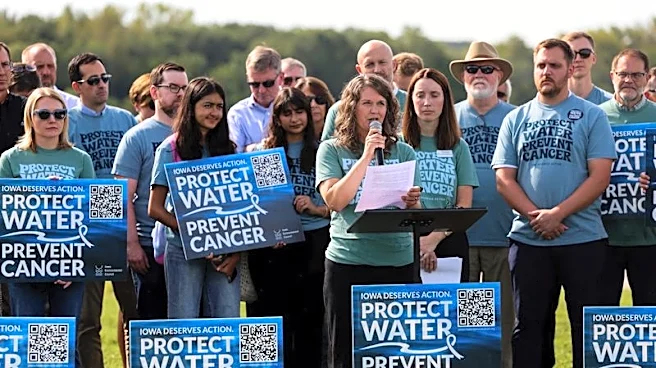
nearly 25 million hogs, which translates to over seven hogs for every Iowan. The number of large Concentrated Animal Feeding Operations (CAFOs) in the state has seen a more than fivefold increase since 1990. These large CAFOs are defined as facilities housing 1,000 or more animal units, such as 1,000 cattle, 714 dairy cows, 2,500 hogs, or 100,000 laying hens. The survey indicates a growing concern among the populace regarding the environmental consequences of this agricultural model. Furthermore, Iowa currently holds the second-highest cancer rate in the United States, and it is one of only three states where these rates are on the rise.
Why It's Important?
The findings from the Iowa survey highlight significant public health and environmental concerns associated with the prevalence of industrial animal agriculture in the U.S. The reported negative environmental impacts, coupled with Iowa's rising cancer rates, suggest a potential link between large-scale farming practices and community well-being. This situation is particularly important for public policy discussions surrounding agricultural regulations, environmental protection, and public health initiatives. The substantial increase in CAFOs over the past decades indicates a shift in agricultural practices that has broad implications for land use, water quality, and air quality. The fact that a majority of Iowans are experiencing these negative effects underscores the need for a reevaluation of current industrial farming models and their long-term sustainability. This issue affects not only the immediate communities but also the broader agricultural industry and consumer health nationwide.
What's Next?
The survey results indicate that 79% of Iowa voters support the introduction of mandatory requirements for industrial agriculture to reduce pollution. This strong public sentiment suggests that there will likely be increased pressure on state lawmakers and regulatory bodies to implement stricter environmental controls on factory farms. Potential next steps could include legislative proposals aimed at limiting the expansion of CAFOs, enforcing more stringent waste management practices, or investing in alternative, more sustainable agricultural methods. Environmental advocacy groups and public health organizations are expected to leverage these findings to push for policy changes. Businesses involved in industrial agriculture may face increased scrutiny and potential new regulations, which could impact their operational costs and practices. The ongoing debate will likely focus on balancing agricultural productivity with environmental protection and public health concerns.
Beyond the Headlines
The issue of industrial-scale animal confinement extends beyond immediate environmental and health concerns, touching upon ethical considerations regarding animal welfare and the broader societal implications of food production systems. The rapid growth of CAFOs reflects a national trend towards industrialized food production, which prioritizes efficiency and cost-effectiveness but often at the expense of environmental integrity and animal well-being. The heavy reliance on antibiotics in these operations contributes to the global challenge of antibiotic resistance, posing a significant threat to human health. Furthermore, the concentration of agricultural power in large corporations raises questions about local food sovereignty and the economic viability of small-scale farming. The Iowa survey serves as a microcosm of a larger national discussion about the true cost of cheap food and the need for a more holistic approach to agriculture that considers ecological, social, and ethical dimensions.