
What's Happening?
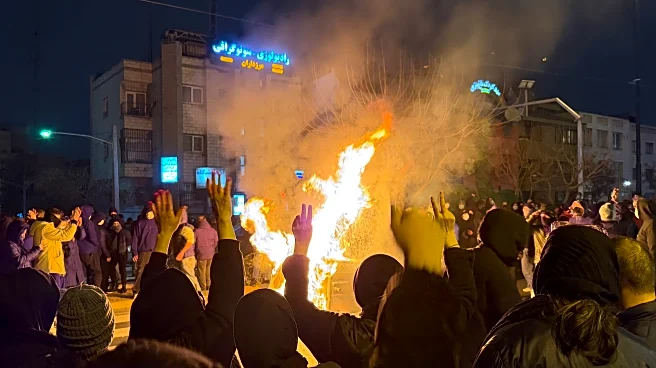
Javad Ganji, a 39-year-old Iranian filmmaker from Hamedan, was reportedly killed during protests in Tehran's Sadeghiyeh area. According to anti-regime activist groups, including the Hengaw Organization
for Human Rights and the National Council of Resistance of Iran (PMOI/MEK), Ganji was shot by the Islamic Regime. The protests, which have been ongoing, are part of a larger movement against the regime, with numerous individuals, including sports figures and ethnic minorities, being identified as victims. Ganji was known for his work as a director and writer on several short films and had also appeared in multiple films. The protests have seen significant casualties, with the regime holding public funerals for security forces killed during the unrest.
Why It's Important?
The death of Javad Ganji highlights the ongoing tensions and human rights issues in Iran, where protests against the regime have led to numerous casualties. The involvement of prominent figures like Ganji underscores the widespread nature of the dissent and the risks faced by those opposing the government. This situation draws international attention to Iran's internal struggles and the regime's response to dissent. The protests and the regime's actions could impact Iran's international relations and its image on the global stage, potentially influencing foreign policy and economic sanctions.
What's Next?
As protests continue, the Iranian regime is likely to face increased scrutiny from international human rights organizations and foreign governments. The ongoing unrest may lead to further crackdowns by the regime, potentially escalating the situation. International bodies may call for investigations into the regime's actions and push for accountability. The protests could also inspire further demonstrations, both within Iran and among the Iranian diaspora, as calls for change grow louder.
Beyond the Headlines
The killing of Javad Ganji and others during the protests raises questions about freedom of expression and the role of artists and intellectuals in political movements. The regime's response to the protests may have long-term implications for cultural and artistic expression in Iran, as well as for the safety of those who choose to speak out. The situation also highlights the ethnic and cultural diversity within Iran and the unique challenges faced by minority groups in the country.