






What's Happening?
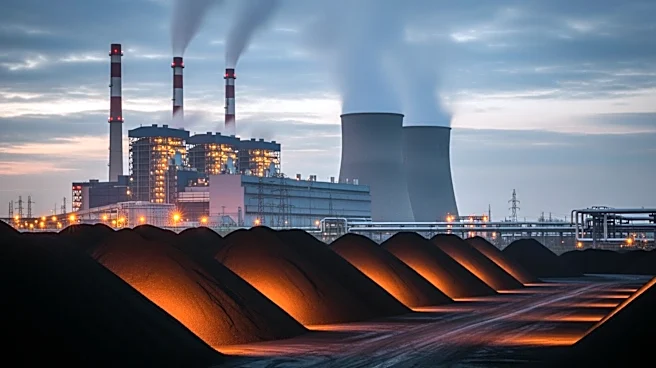
Taiwan Power Co. (Taipower) has announced plans to restart two coal-fired units at the Mailiao Power Plant in response to energy supply disruptions caused by the ongoing conflict in Iran. The decision comes as Taiwan faces challenges in securing liquefied
natural gas (LNG) imports, a key component of its energy strategy. The Mailiao units, operated by Formosa Plastics Group, were previously shut down at the end of last year. The restart is scheduled for May through July, with the possibility of extension. This move aligns with actions taken by other Asian countries like Japan and South Korea, which have also increased coal-fired power generation to mitigate LNG supply risks. Taiwan's energy demand has been rising, driven by its expanding high-tech sector, including the semiconductor industry.
Why It's Important?
The resumption of coal-fired power in Taiwan highlights the broader regional impact of the Iran conflict on energy supplies. As LNG imports face disruptions, countries are reverting to coal to ensure energy security. This shift could have significant environmental implications, as coal is a more polluting energy source compared to LNG. The decision also underscores the vulnerability of global energy markets to geopolitical tensions, which can lead to increased reliance on less sustainable energy sources. For Taiwan, this move may prompt a reevaluation of its energy policies, potentially reviving discussions on nuclear power, which was phased out in recent years.
What's Next?
Taiwanese officials are likely to review the country's energy policies in light of the current situation. This could include considerations to restart nuclear power plants, as Taipower has already applied to reactivate the Maanshan and Kuosheng plants. The government will also need to balance energy security with environmental commitments, potentially leading to stricter environmental controls on coal-fired plants. The ongoing situation in Iran and its impact on LNG supplies will continue to influence Taiwan's energy strategy and may prompt further international cooperation to stabilize energy markets.