







What's Happening?
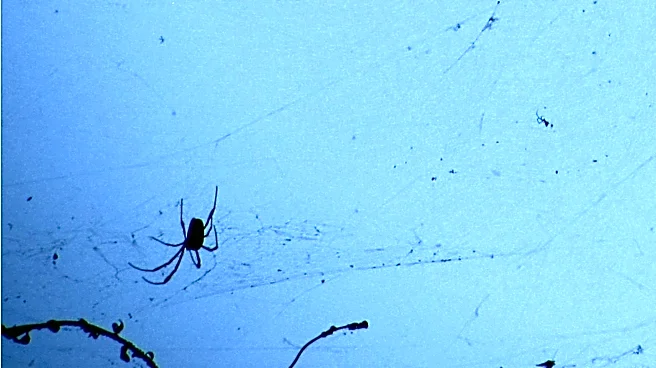
Arizona State University researcher Chad Johnson has been studying black widow spiders in metro Phoenix for decades to understand how they thrive in urban environments. Contrary to their fearsome reputation, black widows are described as shy and secretive,
typically remaining in their webs and only biting when provoked. Johnson's research, conducted with his students at ASU's West Valley campus, involves raising hundreds of these spiders and collecting more from both urban and desert settings for comparative analysis. The study aims to identify factors such as heat, water use, prey availability, and habitat availability that contribute to the spiders' success in developed areas. This research also includes examining how heat affects spider behavior, development, energy use, and web construction, with early findings suggesting urban black widows build smaller webs to conserve energy in hotter conditions. Katharine Smas, a Barrett STEM research aide, is further investigating DNA methylation in urban versus desert black widows to understand gene activity responses to environmental pressures.
Why It's Important?
This research is significant for understanding how various species adapt to a changing and often hotter planet, particularly in urbanized areas. By studying black widows, which thrive in the extreme heat of Phoenix, scientists can gain insights into the mechanisms that allow some species to adapt to rising urban temperatures while others decline. This knowledge can inform broader ecological and conservation efforts, helping to predict and mitigate the impacts of climate change and urbanization on biodiversity. The study of DNA methylation offers a deeper understanding of genetic responses to environmental stress, potentially revealing how organisms epigenetically adjust to new conditions without altering their fundamental DNA. For the scientific community, this work expands the understanding of spider biology and urban ecology, providing a model for studying adaptation in other species facing similar environmental pressures.
What's Next?
Future research will continue to delve into the specific factors that enable black widows to thrive in urban settings, with a focus on the interplay of heat, water, prey, and habitat. Katharine Smas plans to complete her honors thesis comparing DNA methylation in urban and desert black widows, which could provide crucial insights into the molecular basis of their adaptability. The findings from this research could lead to a better understanding of urban ecosystems and how human development influences species survival. This ongoing study may also contribute to broader scientific discussions on climate change adaptation and urban planning, potentially informing strategies for managing urban wildlife and preserving biodiversity in increasingly developed landscapes.
Beyond the Headlines
The study of black widows in urban environments extends beyond entomology, touching upon broader themes of ecological resilience and the unintended consequences of human expansion. The ability of a venomous spider to flourish in close proximity to human populations highlights the complex and often surprising ways nature adapts to altered landscapes. This research implicitly challenges anthropocentric views of urban spaces, demonstrating that cities are not just human domains but dynamic ecosystems where various species find niches. Ethically, understanding these adaptations can foster a more nuanced perspective on cohabitation with wildlife, moving beyond simple eradication to more informed management strategies. Long-term, such studies could influence urban design, promoting green infrastructure and sustainable practices that consider the ecological footprint of human development and foster biodiversity.