
What's Happening?
NASA's Curiosity and Perseverance rovers are simultaneously exploring Mars, each uncovering different aspects of the planet's geological history. Curiosity, operating for nearly 15 years, is ascending
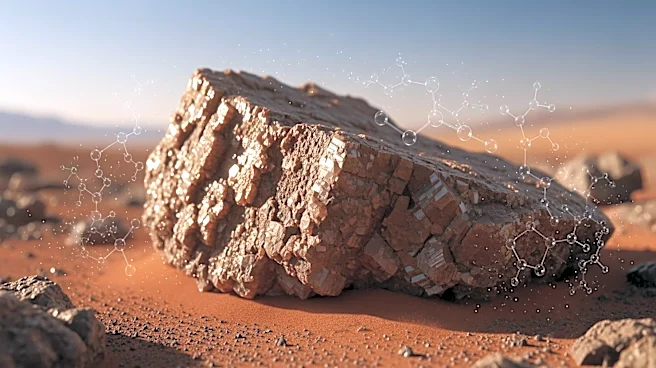
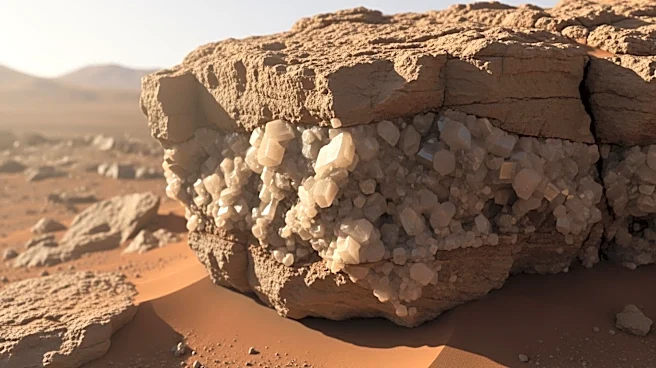
Aeolis Mons in Gale Crater, revealing younger rock layers and discovering diverse organic molecules. Meanwhile, Perseverance is exploring ancient terrains beyond Jezero Crater, capturing images of some of the oldest rocks in the Solar System. The rovers' findings include evidence of past water activity and potential signs of ancient life, such as chemical reactions similar to those caused by microorganisms on Earth. These discoveries are crucial for understanding Mars' past environments and assessing its habitability.
Why It's Important?
The simultaneous missions of Curiosity and Perseverance provide a comprehensive view of Mars' geological history, offering insights into the planet's evolution and potential for past life. The discovery of diverse organic molecules and ancient rock formations enhances our understanding of Mars' climate and atmospheric changes over billions of years. These findings are vital for future missions, as they help identify areas of interest for further exploration and potential sample collection. The data collected by these rovers will inform NASA's strategies for future human exploration and the search for life beyond Earth.
What's Next?
Perseverance is set to continue its exploration of ancient Martian terrains, collecting rock samples for future return to Earth. These samples will undergo detailed analysis using advanced laboratory equipment unavailable on Mars, potentially providing definitive evidence of past life. Curiosity will continue its ascent of Aeolis Mons, further investigating the planet's geological layers. The ongoing missions will contribute to NASA's broader goals of understanding Mars' habitability and preparing for human exploration. Future missions may focus on areas identified by the rovers as having high scientific value.