
What's Happening?
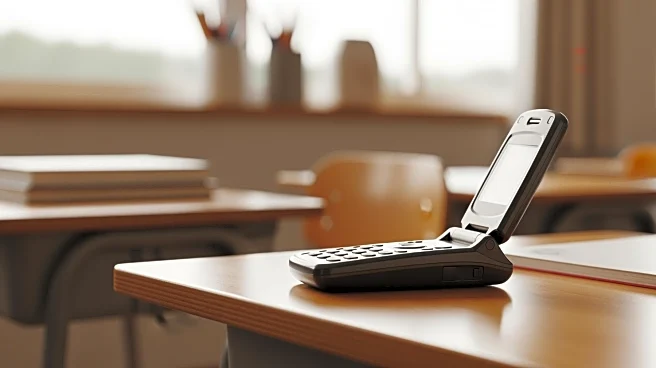
Cranbrook School, a private institution in Sydney, Australia, has announced a new policy banning primary students from using smartphones. Instead, the school is encouraging parents to purchase Nokia flip
phones for their children. This decision aligns with a government-imposed social media ban for individuals under 16, which will take effect soon. The school aims to reduce issues arising from inappropriate smartphone use during commutes. The policy will be implemented next year, allowing students to use only specific models of flip phones before and after school. This move is part of a broader trend, with other schools in Sydney and Western Sydney Catholic schools also adopting similar bans.
Why It's Important?
The decision by Cranbrook School reflects a growing concern about the impact of smartphones and social media on young students. By limiting smartphone use, the school aims to enhance students' focus on learning and social interactions. This policy could influence other educational institutions to adopt similar measures, potentially leading to a broader shift in how technology is integrated into students' lives. The government's social media ban for under-16s, which includes significant fines for non-compliance, underscores the seriousness of these concerns. This initiative may prompt discussions about digital safety and the role of technology in education.
What's Next?
As the policy takes effect, schools and parents will need to adapt to the new regulations. The government's social media ban is likely to face legal challenges, as some argue it restricts free speech and political discourse among young people. The outcome of these challenges could impact future policies on digital safety and youth engagement with technology. Schools may also need to develop additional strategies to support students in navigating digital spaces safely and responsibly.