






What's Happening?
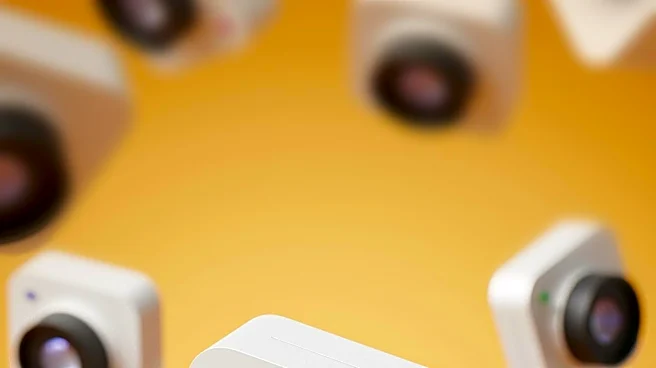
U.S. schools are increasingly considering or implementing facial recognition technology for various purposes, including visitor screening, attendance automation, building access control, and monitoring student movement. Proponents argue that the technology offers
a faster and more accurate way to manage campuses and enhance security. For instance, Detroit Public Schools Community District has installed a visitor-management system that scans faces against identification to verify entry. However, critics raise significant concerns about student privacy, viewing the technology as a form of surveillance that could create an environment where children feel constantly watched. Federal student privacy rules classify biometric records, including facial characteristics used for automated identification, as personally identifiable information, emphasizing the sensitivity of this data.
Why It's Important?
The debate over facial recognition in schools highlights a critical tension between perceived safety benefits and fundamental privacy rights. While the technology can streamline administrative tasks like attendance and potentially enhance security by identifying unauthorized individuals, its broader application, such as tracking student movements throughout the day, raises alarms. Such extensive monitoring could create permanent records of students' activities, including visits to counselors or nurses, potentially leading to disciplinary actions based on automated data. Unlike a compromised password, a student's face cannot be changed, making the security and retention of biometric data paramount. The potential for misidentification, data breaches, and the psychological impact of constant surveillance on students' development of autonomy and privacy are significant concerns that could shape future educational environments and legal precedents regarding data privacy for minors.
What's Next?
The future of facial recognition in U.S. schools will likely involve ongoing legislative and policy debates, as evidenced by New York State's decision to prohibit the technology in schools due to outweighing risks. Other states and districts will need to establish clear guidelines regarding the technology's use, focusing on specific, well-defined problems rather than broad surveillance. This includes determining what data is collected, how it is stored, who can access it, and for how long it is retained, with firm restrictions against selling or sharing data with law enforcement without appropriate legal authority. Districts must also prioritize independent accuracy testing, human review, and public reporting to ensure the technology's reliability and accountability. The discussion will also need to address less intrusive alternatives and the importance of human relationships in fostering a safe and supportive school environment, rather than relying solely on technological solutions.
Beyond the Headlines
The deployment of facial recognition in schools carries profound ethical and societal implications that extend beyond immediate privacy concerns. It introduces children to a level of surveillance typically associated with high-security environments, potentially normalizing constant monitoring from a young age. This could have long-term effects on their understanding of privacy, freedom, and civil liberties. The technology also raises questions about equity and bias, as facial recognition systems have been shown to have varying accuracy rates across different demographics, potentially leading to disproportionate impacts on certain student populations. Furthermore, the commercial interests of technology vendors in promoting these systems necessitate careful scrutiny to ensure that decisions are driven by genuine educational and safety needs rather than profit motives. The broader societal shift towards increased biometric data collection, exemplified by its use in schools, could pave the way for more pervasive surveillance in other public and private sectors, fundamentally altering the balance between individual rights and institutional control.