







What's Happening?
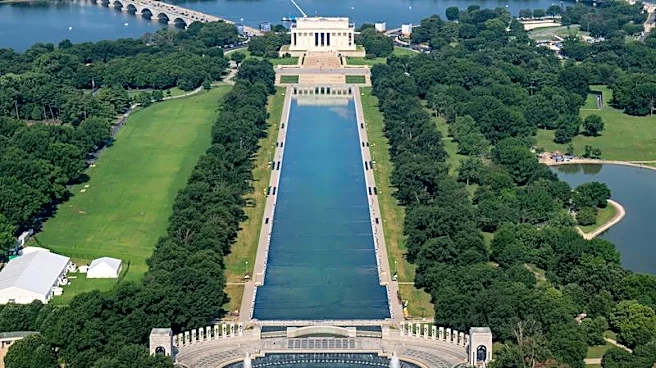
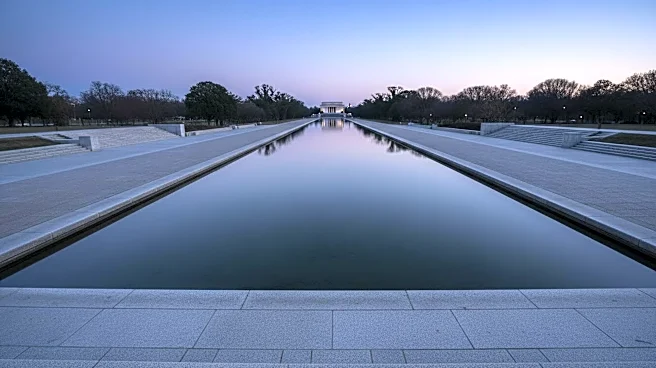
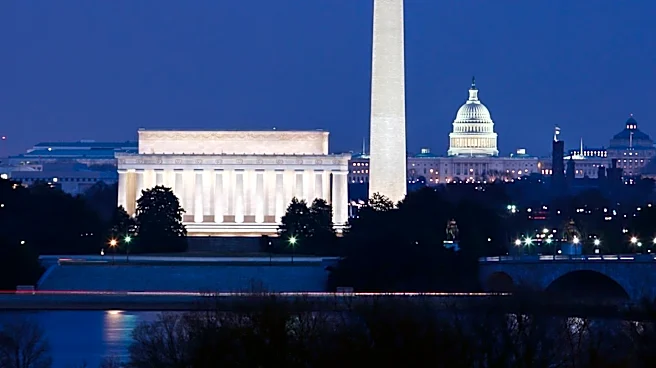
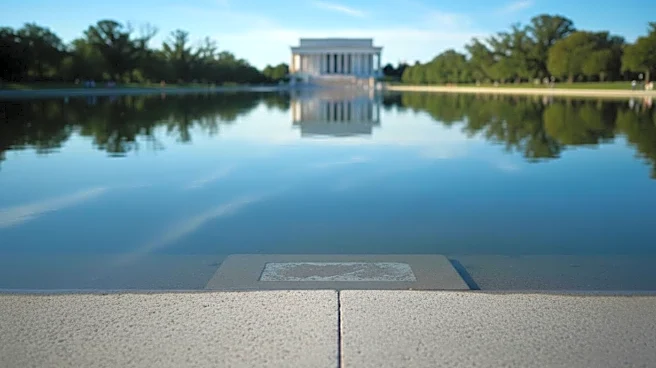
David Hearn, a former Olympic canoe racer, has been indicted on a felony charge for allegedly vandalizing the Lincoln Memorial Reflecting Pool in Washington, D.C. The indictment accuses Hearn of property destruction, specifically for ripping up recently
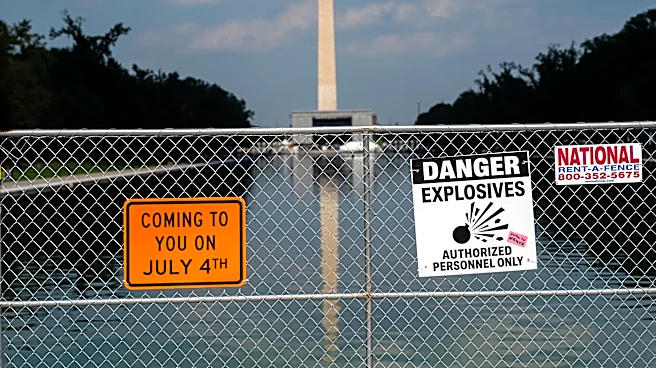
installed sealant on the pool, causing over $1,000 in damage. District of Columbia U.S. Attorney Jeanine Pirro stated that Hearn acted deliberately and violently, pulling up the bottom liner with both hands and behaving belligerently towards an employee who attempted to stop him. Hearn, who previously owned a company that made composite materials for watercraft, claimed he was merely examining the coating out of curiosity. He was detained by National Guard troops and U.S. Park Police for five hours before being released. The incident occurred amidst a $16-million rehabilitation project initiated by President Trump, which has faced several challenges, including vandalism and algae blooms.
Why It's Important?
The indictment of David Hearn highlights ongoing issues with the renovation project at the Lincoln Memorial Reflecting Pool, a significant site in Washington, D.C. The project, launched by President Trump, is part of preparations for the nation's 250th anniversary celebrations. The alleged vandalism and subsequent legal actions underscore the challenges faced in maintaining national landmarks and the potential misuse of government power. The case has drawn attention to the broader implications of security and preservation efforts at historical sites, as well as the legal ramifications for individuals involved in such incidents. The situation also reflects the complexities of managing large-scale public projects and the scrutiny they attract from both the public and authorities.
What's Next?
As the legal proceedings against David Hearn unfold, there may be increased scrutiny on the management and security of the Lincoln Memorial Reflecting Pool renovation project. The administration may face pressure to address the project's issues, including the alleged vandalism and environmental challenges like algae blooms. Stakeholders, including government officials and preservationists, will likely focus on ensuring the project's completion in time for the nation's 250th anniversary celebrations. The case could also prompt discussions on the balance between public access to national landmarks and the need for stringent security measures to protect them from vandalism.
Beyond the Headlines
The incident involving David Hearn raises questions about the ethical and legal dimensions of public interactions with national landmarks. It highlights the tension between individual curiosity and the preservation of historical sites. The case may lead to broader discussions on the responsibilities of citizens in respecting and maintaining public spaces, as well as the role of government in safeguarding these areas. Additionally, the situation could influence future policies on the renovation and security of national monuments, emphasizing the need for clear guidelines and effective enforcement to prevent similar incidents.