
What's Happening?
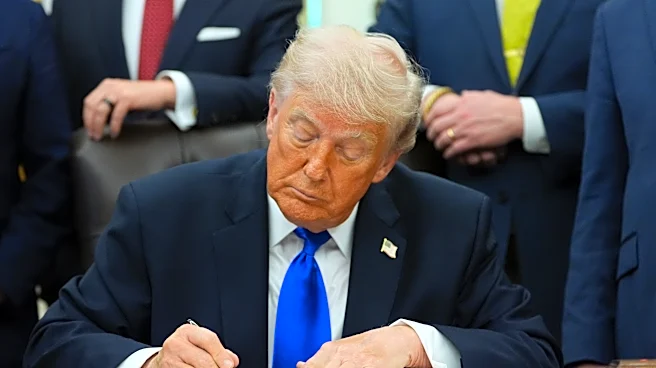
President Donald Trump has announced an increase in tariffs on cars and trucks imported from the European Union to 25 percent, effective next week. This decision comes as a response to what Trump describes
as the EU's failure to comply with a previously agreed trade deal. The current tariff rate on EU vehicles was set at 15 percent under an agreement reached in July 2025. European officials, including Bernd Lange, chair of the European Parliament’s trade committee, have criticized the move, accusing the U.S. of breaching the agreement. The increase in tariffs is part of ongoing trade tensions between the U.S. and the EU.
Why It's Important?
The tariff increase is significant as it could escalate trade tensions between the U.S. and the EU, potentially affecting the automotive industry on both sides. U.S. consumers may face higher prices for European vehicles, while EU automakers could see a decline in sales in the U.S. market. This move may also strain diplomatic relations and could lead to retaliatory measures from the EU, impacting broader economic and trade relations. The decision underscores the ongoing challenges in U.S.-EU trade negotiations and the potential for further economic disruptions.
What's Next?
The new tariffs are set to take effect next week, and it remains to be seen how the EU will respond. European officials may seek to negotiate with the U.S. to prevent the tariffs from being implemented or to mitigate their impact. There is also the possibility of the EU imposing retaliatory tariffs on U.S. goods, which could further escalate the trade conflict. The situation will likely require diplomatic efforts to resolve the underlying trade disagreements and to prevent further economic fallout.