







What's Happening?
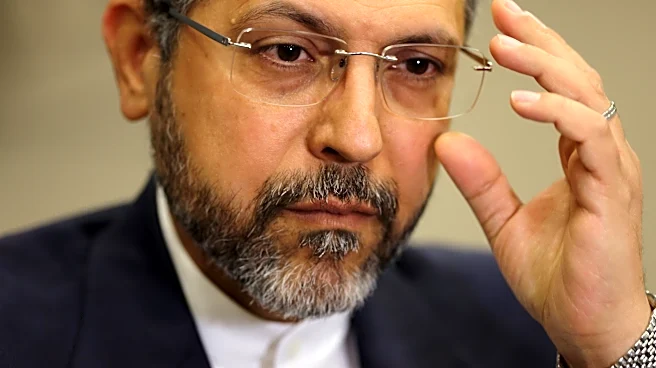
Iran has declined to engage in new face-to-face negotiations with the United States, citing the U.S.'s 'maximalist' demands as a primary obstacle. Iranian Deputy Foreign Minister Saeed Khatibzadeh stated that Iran will not transfer its enriched uranium
to the U.S., countering claims made by President Trump. The refusal to meet stems from the U.S.'s insistence on conditions that Iran finds unacceptable. Khatibzadeh emphasized that while Iran is open to addressing concerns, it will not concede to demands it considers non-starters. The U.S. has been firm on its position, which includes addressing Iran's nuclear capabilities and the sanctions imposed on the country. The Iranian official highlighted the need for a framework agreement before any in-person meetings can occur, stressing that the U.S. must address Iran's concerns, particularly regarding sanctions.
Why It's Important?
The impasse in negotiations between Iran and the U.S. has significant implications for international diplomacy and regional stability. The refusal to engage in talks could exacerbate tensions in the Middle East, particularly with ongoing conflicts involving Iran-backed groups. The U.S.'s demands and Iran's resistance highlight the complexities of nuclear diplomacy and the challenges in reaching a consensus. The situation affects global security, as unresolved issues could lead to further escalation in the region. Additionally, the economic sanctions on Iran have broader implications for international trade and economic relations, impacting not only Iran but also countries engaged in trade with it.
What's Next?
Future developments will likely depend on whether the U.S. and Iran can find common ground on key issues, particularly regarding nuclear capabilities and sanctions. The international community may play a role in mediating or influencing the negotiations. Potential reactions from other countries, especially those in the Middle East, could shape the diplomatic landscape. The situation remains fluid, with the possibility of renewed tensions or breakthroughs in talks depending on the actions of both nations.
Beyond the Headlines
The ongoing dispute between Iran and the U.S. underscores the broader geopolitical dynamics in the Middle East. The involvement of Iran-backed groups in regional conflicts adds layers of complexity to the negotiations. The situation also raises questions about the effectiveness of sanctions as a tool for diplomacy and their humanitarian impact on the Iranian population. The outcome of these negotiations could set precedents for future diplomatic engagements involving nuclear non-proliferation and international sanctions.