





What's Happening?
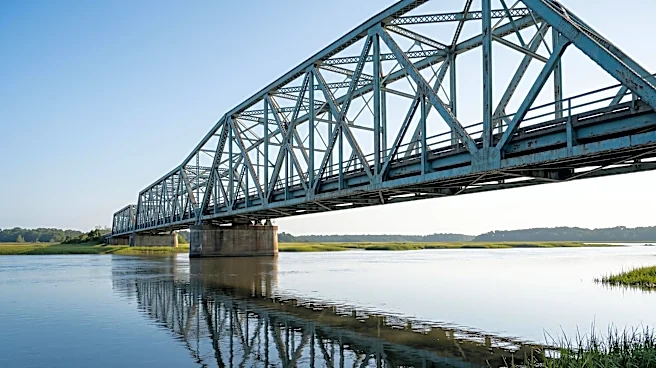
A coalition of environmental and community organizations, including the Alliance for Cape Fear Trees, Cape Fear River Watch, and the North Carolina Coastal Federation, has called on federal officials to reevaluate the 135-foot vertical clearance requirement
for a replacement of the Cape Fear Memorial Bridge. This requirement, established by the U.S. Army Corps of Engineers and the U.S. Coast Guard based on 1990s data, is a significant factor driving the project's estimated cost of over a billion dollars. Critics argue that the data is outdated, as industrial activity north of the bridge has significantly decreased, and the channel is not dredged to accommodate larger vessels. The groups, joined by local governments, have urged Senators Ted Budd and Thom Tillis and Congressman David Rouzer to push for a new study of the navigation channel under Section 216 of the Flood Control Act of 1970, which allows for project review when physical or economic conditions have changed significantly. The current financial restrictions mean the North Carolina Department of Transportation (NCDOT) cannot fund a new bridge without tolls, an unpopular option.
Why It's Important?
The debate over the Cape Fear Memorial Bridge's height requirement has significant implications for regional infrastructure, environmental preservation, and local economies. The high cost associated with the 135-foot clearance could lead to the imposition of tolls, placing a financial burden on residents and businesses in the Cape Fear region. Furthermore, maintaining an outdated height requirement based on historical industrial activity could perpetuate pressure for future dredging and industrial development in environmentally sensitive areas north of the bridge, potentially harming wetlands, forests, and the riverfront. This situation highlights a broader challenge in infrastructure planning: balancing economic development needs with environmental protection and community interests. The outcome of this reevaluation could set a precedent for how federal agencies adapt regulations to changing local conditions and how infrastructure projects are funded and designed to minimize adverse impacts.
What's Next?
The immediate next step involves the federal delegation, including Senators Ted Budd and Thom Tillis and Congressman David Rouzer, responding to the coalition's request to push the U.S. Army Corps of Engineers for a reevaluation of the 135-foot vertical clearance requirement. If the Army Corps agrees to a new study under Section 216 of the Flood Control Act of 1970, it could lead to revised specifications for the bridge, potentially reducing construction costs and mitigating the need for tolls. Should the channel requirements remain unchanged, local governments have also requested additional federal funding to cover the costs associated with serving federal interests. The NCDOT will need to address the funding gap, which currently points towards tolls, a measure that has faced broad opposition. Environmental groups will continue to monitor the project's impact on sensitive ecosystems, particularly concerning potential dredging and industrial development.
Beyond the Headlines
Beyond the immediate concerns of cost and tolls, this issue touches upon the long-term vision for the Cape Fear River and its surrounding communities. The insistence on a 1990s-era clearance requirement, despite a decline in deep-draft commercial navigation, raises questions about the adaptability of federal regulations to evolving regional landscapes. The environmental groups' concerns about potential dredging and industrial development highlight the delicate balance between economic activity and ecological preservation. The UNCW research cited, indicating that dredging accelerates saltwater intrusion and contributes to 'ghost forests,' underscores the potential for irreversible environmental damage. This situation could serve as a case study for how communities can challenge and update federal mandates that no longer align with current environmental realities or local development goals, potentially influencing future infrastructure projects across the nation.