
What's Happening?
Italian Premier Giorgia Meloni has publicly stated her belief that the United States will not resort to military action to take control of Greenland. During a press conference, Meloni emphasized that such
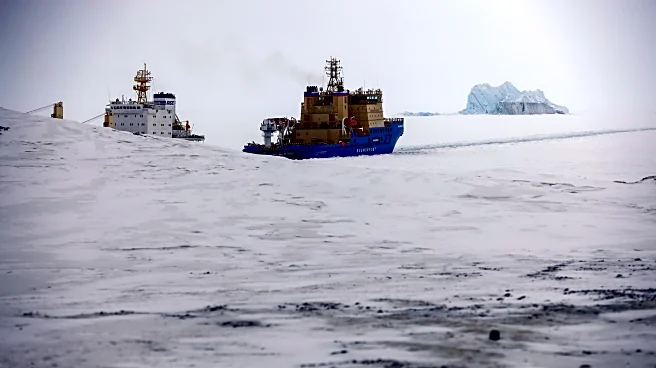
a move would not be in anyone's interest and could have serious consequences for NATO. The White House has been considering options, including military action, to secure the strategically important and mineral-rich island, which is part of Denmark, a NATO ally. Meloni, a close ally of President Trump, suggested that a stronger NATO presence in the Arctic could address U.S. security concerns without resorting to military measures. She highlighted the strategic importance of Greenland and the Arctic region, noting the presence of various foreign actors and the need for NATO to mitigate potential threats.
Why It's Important?
The discussion around Greenland underscores the geopolitical significance of the Arctic region, which is becoming increasingly important due to its strategic location and natural resources. The U.S. interest in Greenland reflects broader concerns about foreign influence in the Arctic, particularly from countries like Russia and China. A military move by the U.S. could strain relations within NATO and with Denmark, potentially leading to diplomatic tensions. Meloni's call for a stronger NATO role suggests a preference for multilateral approaches to security challenges, which could influence future U.S. and NATO strategies in the region.
What's Next?
The situation may lead to increased diplomatic efforts within NATO to address security concerns in the Arctic. The U.S. administration's next steps could involve further discussions with NATO allies to explore non-military solutions. Denmark and other European countries are likely to continue advocating for the sovereignty of Greenland, emphasizing international law and diplomatic resolutions. The outcome of these discussions could shape the future of Arctic policy and U.S.-European relations.