


What's Happening?
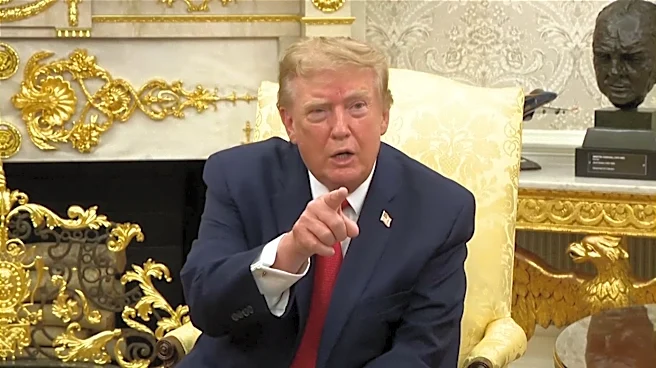
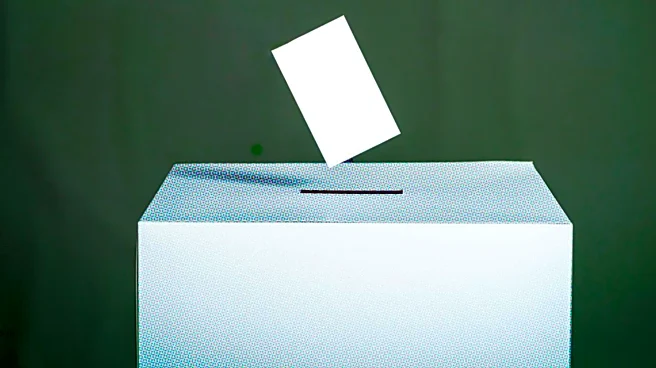
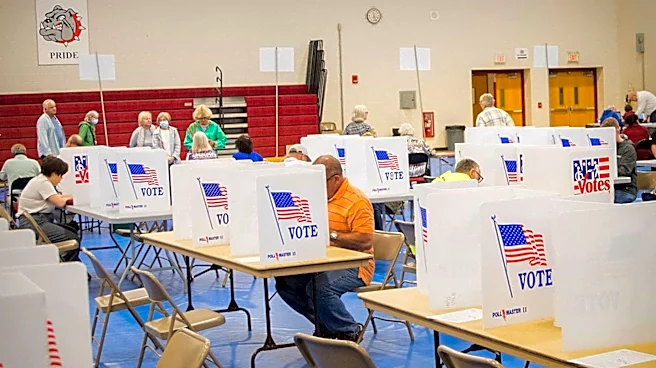
President Trump, a vocal critic of mail-in voting, cast his ballot by mail in Florida's Republican primary. Records obtained by Politico indicate that President Trump, 80, returned his Republican ballot to Palm Beach County, Florida, on August 13, in advance
of Tuesday's primary. This action comes despite his previous statements, including one last month where he called mail-in voting 'inherently corrupt.' A White House spokesperson, Olivia Wales, defended President Trump's use of a mail-in ballot, stating that the SAVE America Act includes 'commonsense exceptions for Americans to use mail-in ballots for illness, disability, military, or travel.' The spokesperson clarified that President Trump is a resident of Palm Beach and participates in Florida elections, but primarily resides at the White House in Washington, D.C. This is not the first instance of President Trump voting by mail; he also did so in March for a special election for the Florida legislature, even though he had been in Mar-a-Lago and early in-person voting was available.
Why It's Important?
This event highlights a significant political contradiction, as President Trump has consistently campaigned against mail-in voting, labeling it as 'mail-in cheating' and 'inherently corrupt.' His use of a mail-in ballot while simultaneously advocating for legislation like the SAVE America Act, which aims to ban most voting by mail and require in-person proof of citizenship for voter registration, could impact public perception of his stance. Critics may view this as hypocrisy, potentially undermining his arguments against the practice. Conversely, supporters might accept the White House's explanation of 'commonsense exceptions,' reinforcing the idea that his opposition is to universal mail-in voting rather than all forms of it. This situation could further fuel debates surrounding election integrity and voting methods, influencing voter confidence and political discourse ahead of future elections. The discrepancy between his rhetoric and actions could also be used by opposing political campaigns to question his consistency and credibility on electoral reform.
What's Next?
The immediate aftermath will likely involve continued scrutiny and debate from political commentators, media outlets, and opposing political figures regarding President Trump's use of a mail-in ballot. His political opponents are expected to leverage this action to highlight perceived inconsistencies in his policy positions on election integrity. President Trump and his allies will likely continue to defend his actions by emphasizing the 'exceptions' clause of the SAVE America Act, distinguishing his personal use from his broader opposition to universal mail-in voting. This event could also intensify discussions around the SAVE America Act itself, potentially leading to renewed calls for its passage or increased opposition from those who advocate for broader mail-in voting access. The broader implications for voter behavior and trust in election processes will be observed, as the public processes this apparent contradiction from a prominent political figure.
Beyond the Headlines
Beyond the immediate political implications, this situation touches upon deeper issues concerning political messaging, public trust, and the interpretation of electoral laws. The apparent contradiction between President Trump's public statements and his personal voting method raises questions about the effectiveness of political rhetoric and its impact on voter perception. It highlights how political figures navigate complex issues, often employing nuanced arguments or exceptions to justify actions that might otherwise seem inconsistent with their stated positions. This event could also contribute to a broader erosion of trust in political leaders if the public perceives a disconnect between words and deeds. Furthermore, it underscores the ongoing tension between ensuring election security and maintaining voter accessibility, a debate that continues to shape U.S. electoral policy. The incident may also prompt a re-evaluation of how 'exceptions' are defined and communicated within proposed voting legislation, influencing future legislative efforts.