





What's Happening?
The Philippines has initiated preliminary agreements with Indonesia and Thailand to secure emergency access to oil supplies. This move comes as the country aims to bolster its energy security in response to disruptions stemming from the US-Israeli conflict
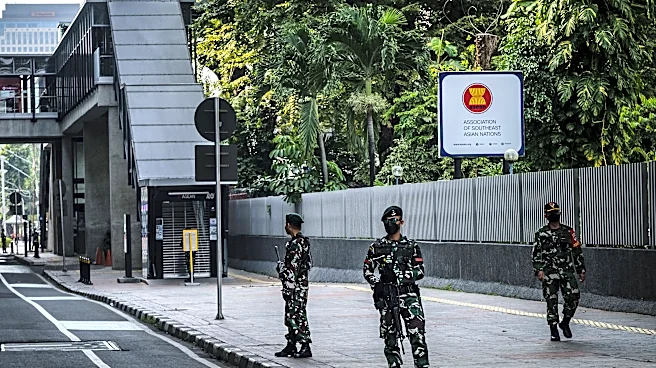
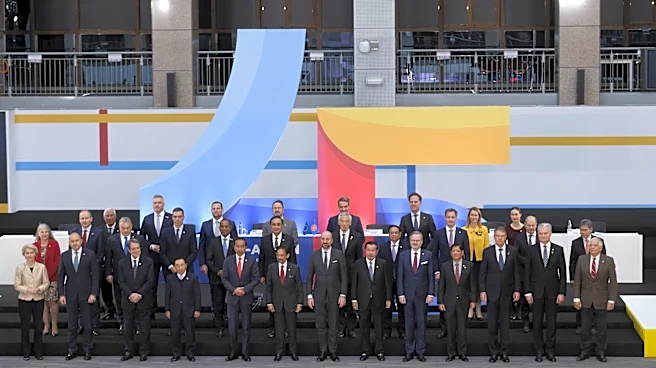
involving Iran. State-run Philippine National Oil Company–Exploration Corp. (PNOC-EC) signed separate letters of intent with Indonesia’s Interport Mandiri Utama and the Shell Company of Thailand Limited. These agreements were finalized during the ASEAN Business and Investment Summit in Manila. The initiatives, supported by the Economic Research Institute for ASEAN and East Asia (ERIA) and the Indonesian Business Council, will explore oil ticketing mechanisms. This system would allow the Philippines to utilize existing oil storage facilities in Indonesia and Thailand during emergencies, circumventing the need to construct new infrastructure or pre-purchase large volumes of oil. The Philippines has been under a state of national energy emergency since March due to the escalating conflict involving Iran, as it imports approximately 98 percent of its oil from the Gulf region.
Why It's Important?
This development is crucial for the Philippines as it highlights the nation's vulnerability to international market shocks and geopolitical instability. By seeking emergency oil access, the Philippines aims to mitigate the impact of supply disruptions and rising fuel prices on its economy and citizens. The reliance on Middle Eastern crude supplies makes many Southeast Asian countries susceptible to global events, and this initiative could serve as a model for regional energy cooperation. The proposed oil ticketing system, a first for Southeast Asia, could enhance regional resilience and reduce individual countries' dependence on volatile global markets. Furthermore, President Ferdinand Marcos Jr.'s call for a regional study on joint oil stockpiling underscores a broader ASEAN effort to diversify energy sources and strengthen collective energy security. This collaborative approach could set a precedent for how developing nations manage energy risks in an increasingly interconnected and unpredictable world.
What's Next?
The Philippines will continue discussions with Indonesia and Thailand to formalize the oil ticketing mechanisms. Laos and Timor-Leste are also considering participation, indicating a potential expansion of this regional energy security framework. Concurrently, the Philippine government is evaluating the proposed Philippine Strategic Petroleum Reserve Act, which aims to establish the country's first state-owned oil reserve. This act, if passed, would further strengthen domestic resilience and protect consumers from global supply shocks. Energy lawyer and professor Noel M. Baga emphasizes the importance of establishing domestic reserves and adequate storage and refining capacity to reduce import dependence. The ongoing regional study on joint oil stockpiling, led by Manila as the current ASEAN chair, will likely inform future energy policies and collaborations among member states.
Beyond the Headlines
The Philippines' proactive measures reflect a growing global trend among nations to re-evaluate and strengthen their energy security strategies in the face of escalating geopolitical tensions and climate-related disruptions. The adoption of an oil ticketing system, while innovative for Southeast Asia, points to a broader shift towards collaborative and flexible energy solutions rather than solely relying on traditional, static reserves. This approach could foster greater regional integration and mutual support, potentially leading to more stable energy markets within ASEAN. The ethical implications of such agreements involve balancing national sovereignty with regional interdependence, especially concerning resource allocation during crises. Long-term, these initiatives could accelerate the diversification of energy sources and investments in renewable energy, as countries seek to reduce their reliance on fossil fuels and volatile international markets.