
What's Happening?
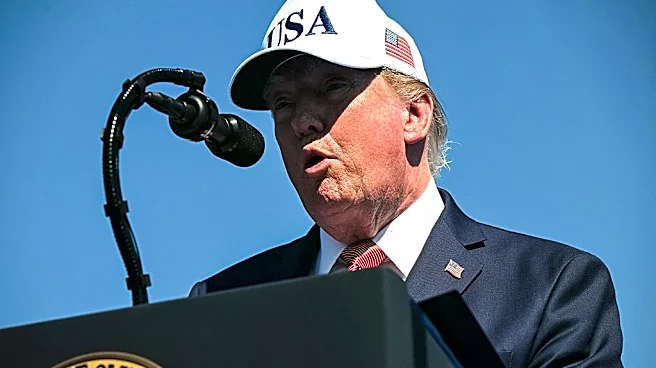
President Trump's job approval numbers in Michigan have significantly declined, now mirroring the struggling position faced by Democrat Joe Biden at the beginning of 2024. This shift in voter sentiment poses a direct threat to Michigan Republicans as
they head into the pivotal midterm elections, just eight weeks away. Two years prior, President Trump had successfully leveraged voter dissatisfaction in Michigan to secure the White House. However, the current political landscape in the battleground state has flipped, with his popularity now acting as a detriment to his party's candidates.
Why It's Important?
Michigan is a crucial swing state, and President Trump's diminished approval ratings there could have profound implications for the Republican Party's ability to retain or gain seats in the U.S. House and Senate. The state's electoral outcomes often serve as a bellwether for national political trends. If President Trump's unpopularity acts as an 'anchor,' it could drag down Republican candidates who are closely associated with him, making it harder for them to win competitive races. This situation forces Michigan Republicans to navigate a challenging political environment, potentially leading to strategic decisions about how closely to align with President Trump's image and policies, especially in districts where independent and moderate voters hold significant sway.
What's Next?
As the midterm elections draw nearer, Michigan Republicans will likely face increased pressure to address President Trump's declining popularity and its potential impact on their campaigns. Candidates may attempt to differentiate themselves or focus on local issues to mitigate the negative effects of his approval ratings. The Democratic Party, conversely, will likely seek to capitalize on President Trump's unpopularity to boost their candidates in Michigan. The coming weeks will be critical for both parties as they intensify their efforts to mobilize voters and shape public opinion in this key battleground state, with the outcome potentially influencing the balance of power in Congress.
Beyond the Headlines
The situation in Michigan reflects a broader national trend where the political fortunes of a party can be heavily influenced by the approval ratings of its most prominent figure. This highlights the personalization of modern U.S. politics, where individual leaders can become both assets and liabilities for their party. For Michigan, this dynamic could lead to a more volatile and unpredictable election cycle, potentially resulting in unexpected outcomes in races that might otherwise be considered safe. It also underscores the importance of state-level political dynamics, as national trends manifest differently in various regions, requiring tailored campaign strategies from both parties.