






What's Happening?
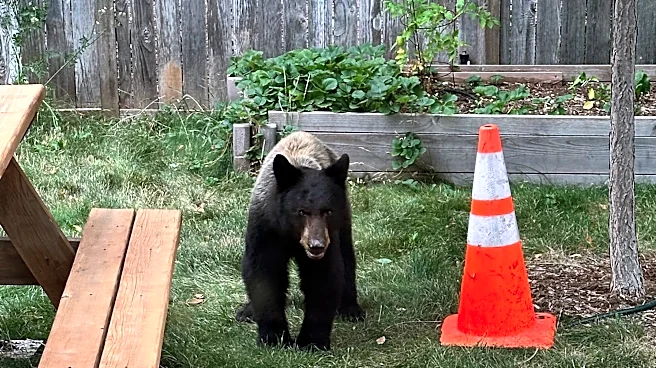
A couple celebrating their seventh anniversary in Gatlinburg, Tennessee, experienced an unexpected encounter when a black bear entered 'The Spice & Tea Exchange' shop. Victoria Puyol and Joshua Card were inside the store when the bear walked in, prompting
Card to begin recording. The bear, described as curious rather than aggressive, proceeded to rummage through the shop's inventory, showing particular interest in a sweet-tea blend and tea diffusers. Despite an employee from a neighboring store sounding an air horn, the bear remained largely unfazed. The couple, initially advised to back away, were directed by the store clerk to an emergency exit behind the register. The encounter lasted approximately 10 to 15 minutes before the bear eventually left the premises. Shop employees later informed the couple that the bear was a repeat visitor, having previously entered the store and taken sugar earlier in the week.
Why It's Important?
This incident highlights the increasing frequency of human-wildlife interactions in areas bordering natural habitats, particularly in tourist destinations like Gatlinburg, Tennessee. The bear's entry into a commercial establishment underscores the challenges faced by both residents and businesses in managing wildlife encounters, especially when animals become habituated to human presence and food sources. For local businesses, such events can lead to property damage, inventory loss, and potential safety concerns for customers and staff. For tourists, while initially a novel experience, it raises awareness about the importance of wildlife safety protocols and the unpredictable nature of wild animals. The fact that the bear was a 'repeat offender' suggests a broader issue of wildlife management and the need for effective strategies to deter animals from urban areas, ensuring public safety while also protecting wildlife.
What's Next?
Following this incident, it is likely that local authorities and business owners in Gatlinburg will review and potentially reinforce existing wildlife management protocols. This could include increased public awareness campaigns about safely coexisting with bears, stricter enforcement of food storage regulations, and the implementation of bear-resistant measures for commercial establishments. The 'repeat offender' status of the bear might prompt wildlife officials to consider specific interventions, such as trapping and relocating the animal, if it continues to pose a risk to public safety or property. For 'The Spice & Tea Exchange' and other businesses in the area, there may be a push to install more robust deterrents or modify store entrances to prevent future intrusions. The couple's experience, widely shared, could also influence tourist behavior, encouraging visitors to be more vigilant and adhere to wildlife safety guidelines during their stays.
Beyond the Headlines
The bear's intrusion into the tea shop in Gatlinburg reflects a deeper ecological and societal tension: the expanding interface between human development and natural wildlife habitats. As urban and tourist areas encroach further into wilderness, encounters with animals like bears become more common, challenging traditional notions of human-wildlife separation. This incident raises ethical questions about how humans should manage wildlife that adapts to and exploits human environments. Is it the responsibility of humans to modify their behavior and infrastructure, or should wildlife be actively managed to prevent such interactions? The bear's 'curious' rather than 'aggressive' demeanor, as described by the couple, also prompts reflection on public perception of wildlife and the potential for misinterpreting animal behavior. This event serves as a microcosm of broader environmental issues, highlighting the need for sustainable coexistence strategies that protect both human communities and natural ecosystems.