
What's Happening?
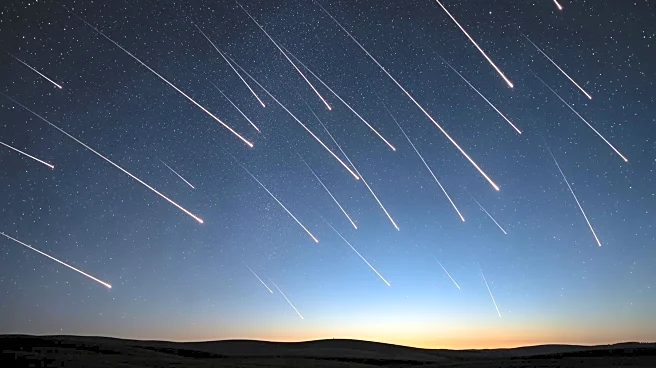
The annual Geminid meteor shower is set to peak on the night of December 13-14, with expectations of more than 100 meteors per hour visible from dark, rural locations. This meteor shower, originating from the asteroid
3200 Phaethon, is known for its intensity and vivid fireballs. The Geminids have been intensifying since their recognition in the mid-1800s, with current rates potentially reaching around 150 meteors per hour under ideal conditions. The shower will be visible from a single point in the sky near the star Castor in the Gemini constellation. Observers are advised to face north or west to minimize the effects of moonlight, as the Moon will be a 26%-illuminated crescent during the peak hours.
Why It's Important?
The Geminid meteor shower is significant for both amateur and professional astronomers due to its high visibility and the scientific interest in its origin. The shower provides an opportunity for public engagement with astronomy, as it is accessible to families and individuals without specialized equipment. The event also contributes to scientific research, with initiatives like the Lunar Impact Flashes campaign seeking to capture meteor impacts on the Moon. This data can enhance understanding of meteoroid activity and the dynamics of the asteroid 3200 Phaethon, which is the source of the Geminids. The shower's increasing intensity over the years highlights the dynamic nature of celestial events and their potential impact on Earth.
What's Next?
Observers are encouraged to participate in viewing the Geminid meteor shower, with the best visibility expected in the pre-dawn hours of December 14. The event coincides with a weekend, making it more accessible for public participation. Additionally, the Japanese Destiny+ mission is set to make a close flyby of the asteroid 3200 Phaethon in 2030, which will provide further insights into the asteroid's composition and behavior. This mission could reveal more about the processes that contribute to the Geminid meteor shower and its future activity.
Beyond the Headlines
The Geminid meteor shower not only offers a spectacular visual display but also raises questions about the long-term changes in meteor activity and their implications for Earth. The increasing intensity of the Geminids suggests that gravitational interactions with planets like Jupiter are altering the stream's path, potentially increasing the frequency of meteors. This phenomenon underscores the interconnectedness of celestial bodies and the influence of gravitational forces in shaping astronomical events. The study of such showers can also inform planetary defense strategies by improving understanding of meteoroid trajectories and impact risks.