



What's Happening?
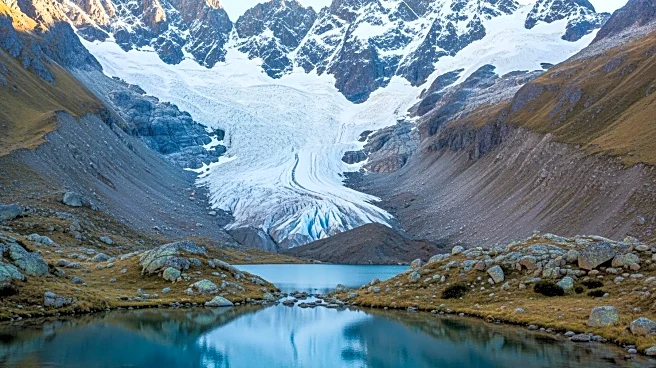
Peru, home to over 70% of the world's tropical glaciers, has experienced a significant loss of glacial area, with a 29% reduction between 2000 and 2016. This alarming trend, as reported by the Journal of Water and Climate, suggests that these glaciers could
vanish entirely by 2056. The retreat of these glaciers is having profound impacts on local communities, particularly those dependent on agriculture and livestock. Jenny, a resident of the Llanganuco basin, highlights the challenges faced by these communities, including erratic rainfall patterns and rising temperatures disrupting traditional agricultural cycles. The Andes, with their glaciers, wetlands, and rivers, are crucial for sustaining both local and distant ecosystems, including the Amazon Basin. The melting glaciers are also causing acid rock drainage, contaminating water sources with heavy metals, and exacerbating water scarcity in regions like Huaraz.
Why It's Important?
The retreat of Andean glaciers poses significant threats to both local communities and broader ecosystems. The loss of glaciers disrupts the water cycle, affecting agriculture and water supply for millions. The contamination of water sources due to acid rock drainage and pollution from mining operations further exacerbates these challenges. The situation highlights the vulnerability of communities that rely on these natural resources, particularly in the face of climate change. The environmental degradation also underscores the historical and ongoing exploitation of natural resources, with mining operations contributing to pollution and social inequality. The efforts of Andean communities to adapt through traditional practices and collaboration with NGOs and local governments demonstrate resilience but also highlight the need for greater support and recognition from state and international bodies.
What's Next?
As the glaciers continue to retreat, the Andean communities are likely to face increasing challenges related to water scarcity and agricultural disruption. The ongoing efforts to revive ancestral practices and restore ecosystems may provide some relief, but broader systemic changes and support are necessary to address the root causes of environmental degradation. The renewal of mining licenses, such as that of the Antamina mine, suggests that industrial activities will continue to pose environmental risks. The situation calls for a reevaluation of policies and practices to ensure sustainable development and environmental protection. International cooperation and investment in sustainable technologies could play a crucial role in supporting these communities and preserving the ecosystems they depend on.
Beyond the Headlines
The retreat of glaciers in the Andes is not just an environmental issue but also a cultural and social one. The traditional knowledge and practices of Andean communities offer valuable insights into sustainable living and adaptation to climate change. However, these communities often lack the resources and support needed to implement large-scale solutions. The situation also raises ethical questions about the responsibility of industrialized nations and corporations in contributing to climate change and environmental degradation. The legacy of colonial exploitation and its modern manifestations in mining and resource extraction continue to impact these communities, highlighting the need for justice and equity in addressing environmental challenges.