




What's Happening?
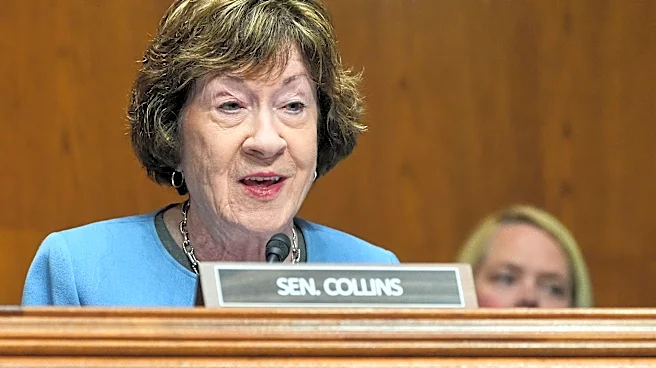
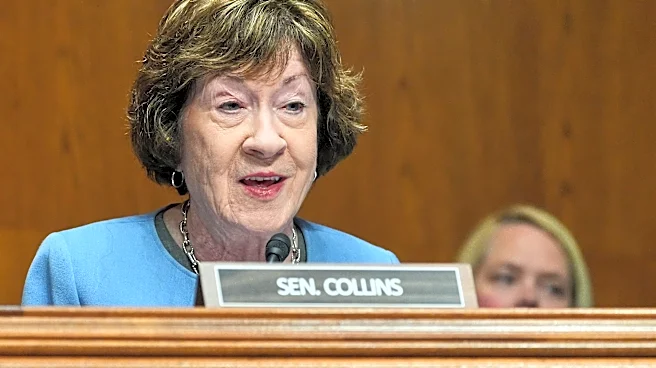
An advertisement from WinSenate, a Democratic-affiliated super PAC, has accused Senator Susan Collins (R-Maine) of voting to cover up the Jeffrey Epstein files and alleged that Epstein's 'business partner' funneled $3 million to her super PAC. PolitiFact
has investigated these claims, finding them to be false. The ad specifically referenced a September 2025 vote on an amendment to a defense spending bill, which Collins voted against, stating it was not appropriate for that bill. However, PolitiFact noted that Collins had previously supported similar measures. In July 2025, the Senate Appropriations Committee, which she chairs, unanimously voted to direct the Justice Department to preserve Epstein files and report to lawmakers. Furthermore, in November 2025, the Senate unanimously passed a standalone bill to release the Epstein files, which Collins praised as an 'important step for the survivors.' The ad also claimed that Blackstone CEO Stephen Schwarzman, who donated $3 million to a pro-Collins PAC, was Epstein's business partner. PolitiFact found no evidence to support this claim, clarifying that both men were early members of the Core Club in New York City, but not business partners.
Why It's Important?
This fact-check is important as it addresses the spread of potentially misleading information in political advertising, particularly concerning sensitive and high-profile issues like the Jeffrey Epstein case. Misinformation can significantly influence public perception and voter decisions, especially in competitive political races. By debunking the claims made against Senator Collins, PolitiFact helps to ensure that voters have accurate information about their elected officials' actions and affiliations. The scrutiny of political ads highlights the ongoing challenge of maintaining truthfulness in political discourse and the role of independent fact-checking organizations in upholding journalistic integrity. The allegations, if left unaddressed, could unfairly tarnish a politician's reputation and distract from substantive policy debates, thereby impacting the democratic process.
What's Next?
The debunking of these claims by PolitiFact may lead to increased scrutiny of political advertisements, particularly those from super PACs, during future election cycles. Political campaigns and fact-checking organizations will likely continue to monitor and challenge misleading statements to ensure transparency and accuracy in public discourse. The focus on the Epstein files and related political contributions is expected to remain a recurring theme in U.S. politics, especially as more documents are released and investigations continue. This incident could also prompt further discussions about the ethical responsibilities of political advertisers and the need for clearer regulations or industry standards to prevent the dissemination of false information. Voters are encouraged to remain vigilant and seek out verified information from reputable sources when evaluating political claims.
Beyond the Headlines
The incident underscores a broader trend in modern political campaigning where complex legislative actions and personal associations are often oversimplified or distorted for rhetorical effect. The use of the 'Epstein files' as a political weapon highlights the enduring public fascination and outrage surrounding the case, making it a potent, albeit often misused, topic in political attacks. The distinction between being a 'founding member' of a club and a 'business partner' illustrates how subtle linguistic manipulations can create significant misimpressions. This situation also brings to light the influence of super PACs and their ability to spend unlimited amounts of money on campaigns, raising questions about accountability and the potential for unchecked dissemination of misleading information in the political arena. The ongoing debate over the release of sensitive documents and the public's right to know versus individual privacy will likely continue to shape legal and ethical discussions.