



What's Happening?
A recent study conducted by researchers in the United States has uncovered a previously unknown role of bacteria in the formation of calcium oxalate kidney stones, which are the most common type of kidney stones. The study, published in the Proceedings
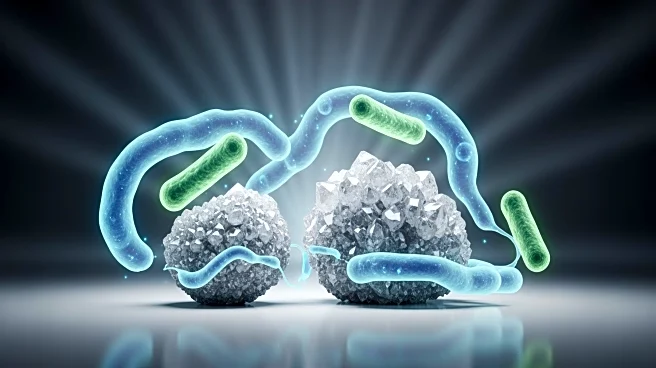
of the National Academy of Sciences (PNAS), found live bacteria and biofilms within these stones, challenging the long-held belief that they form solely through chemical and physical processes. Urologist Kymora Scotland from UCLA highlighted that this discovery could lead to new therapeutic strategies targeting the microbial environment of kidney stones. The research suggests that bacteria may help seed the stones, becoming trapped as crystals form around them. This finding could explain the link between recurrent urinary tract infections and kidney stone formation.
Why It's Important?
The discovery of bacteria's involvement in kidney stone formation is significant as it opens up potential new treatment strategies for a condition that affects millions worldwide. Kidney stones can cause severe pain and lead to serious complications if not treated properly. Understanding the microbial role in stone formation could lead to more effective prevention and treatment methods, reducing the incidence of recurrent stones and associated healthcare costs. This research also challenges existing medical paradigms, suggesting that other types of kidney stones might also involve bacterial processes, which could further broaden the scope of future studies and treatments.
What's Next?
Following this breakthrough, researchers are conducting further studies to understand the interaction between bacteria and calcium-based kidney stones. The goal is to determine why certain patients are more susceptible to recurrent stone formation and what specific bacterial species contribute to this process. These insights could lead to the development of targeted therapies that prevent stone formation by altering the microbial environment in the urinary tract. Additionally, the study encourages a reevaluation of the role of bacteria in other types of kidney stones, potentially leading to broader applications of these findings in nephrology.