




What's Happening?
The President Trump administration is facing accusations of a concerted effort to control and reshape the narrative of U.S. history, particularly through its interactions with the Smithsonian Institution and other national historical sites. Lonnie G.
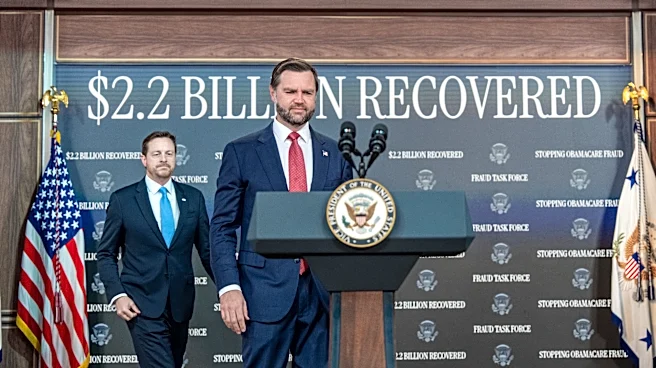
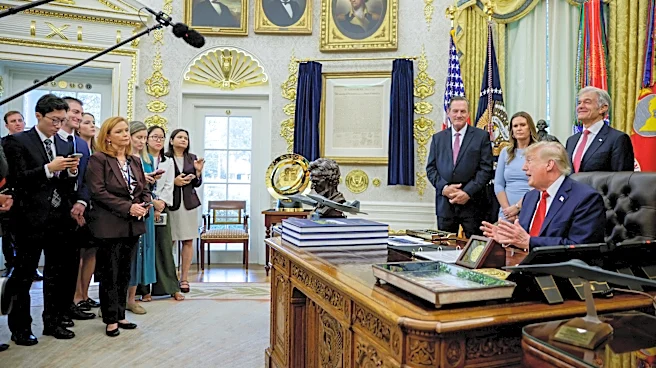
Bunch III, secretary of the Smithsonian, resigned amidst intense criticism from President Trump and Republican politicians who deemed the institution's focus on diverse historical perspectives as 'woke.' In March 2025, President Trump signed an executive order, 'Restoring Truth and Sanity to American History,' which criticized the Smithsonian for promoting 'divisive, race-centered ideology' and narratives that portray American values negatively. This order instructed Vice President JD Vance to remove 'improper ideology' from Smithsonian displays. The administration also attempted to fire Kim Sajet, director of the National Portrait Gallery, and conducted a 'comprehensive internal review' of several Smithsonian museums to ensure alignment with a narrative of 'American exceptionalism.' A White House report, 'Saving America’s Story,' further criticized the National Museum of American History for allegedly downplaying Christianity and engaging in 'anti-white' activism. These actions are part of a broader pattern, including the removal of a slave memorial in Philadelphia, the reinstallation of Confederate base names, and the removal of civil rights leaders' names from Navy ships, all aimed at presenting a more 'patriotic' and less critical view of American history.
Why It's Important?
This alleged campaign to control historical narratives has profound implications for public education, cultural institutions, and the understanding of American identity. By attempting to impose a singular, celebratory version of history, the administration risks suppressing critical inquiry and diverse perspectives, which are essential for a comprehensive understanding of the nation's past. The targeting of institutions like the Smithsonian, which are custodians of national memory, undermines their academic independence and their role in presenting a nuanced and inclusive history. This approach could lead to a generation of citizens with a limited and potentially biased understanding of their country's complexities, struggles, and achievements. Furthermore, the reinstallation of Confederate names and the removal of civil rights figures from public honors signal a potential rollback of efforts to acknowledge and reconcile with painful aspects of American history, potentially exacerbating social divisions and hindering progress towards a more equitable society.
What's Next?
The ongoing efforts by the President Trump administration to influence historical narratives are likely to continue, especially in the lead-up to the nation's 250th anniversary celebrations. This could involve further executive orders, increased scrutiny of educational curricula, and continued pressure on cultural institutions to align with the administration's preferred historical interpretations. Historians, academics, and civil society groups are expected to continue pushing back against these efforts, advocating for academic freedom and the preservation of diverse historical perspectives. Legal challenges, such as those seen with the removal of plaques from National Park Service sites, may also continue as groups seek to protect historical integrity. The debate over how American history is taught and presented will likely remain a contentious issue, influencing political discourse and potentially shaping future cultural and educational policies.
Beyond the Headlines
The administration's actions extend beyond mere historical interpretation; they reflect a broader ideological struggle over national identity and values. By emphasizing a narrative of 'American exceptionalism' and downplaying aspects of conflict and injustice, the administration seeks to foster a particular form of patriotism that may exclude or marginalize certain groups. This approach mirrors tactics used by authoritarian regimes globally, where controlling historical narratives is a common tool for consolidating power and suppressing dissent. The debate over history becomes a battleground for defining who belongs in the national story and whose experiences are deemed legitimate. This has long-term implications for social cohesion, democratic discourse, and the ability of a society to learn from its past mistakes. The erosion of trust in independent historical institutions could also pave the way for increased polarization and a diminished capacity for critical thinking among the populace.