
What's Happening?
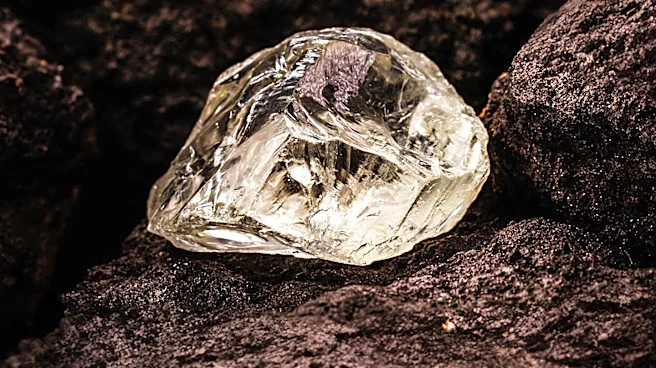
Jack Pearadin, a Navy reservist and amateur gem hunter, recently unearthed a 6.03-carat diamond at Crater of Diamonds State Park in Arkansas. This discovery marks his most significant find after more than
a decade of searching, during which he has found over 300 gems. Pearadin claims collectors have suggested the diamond could be worth up to $1 million, though an experienced appraiser cited by The Associated Press estimates its value closer to $250,000. The diamond, roughly the size of a fingernail, is the largest found at the park this year. Pearadin livestreamed the moment of discovery on TikTok, expressing his excitement. Crater of Diamonds State Park is unique as one of the only places globally where the public can search for diamonds and keep their findings, charging a $15 entry fee for a 5-gallon bucket of rocks. Most diamonds found there are small, typically weighing about a quarter of a carat, with larger finds being rare but not unprecedented.
Why It's Important?
This discovery highlights the unique geological significance of Crater of Diamonds State Park, which remains one of the few public diamond-hunting sites in the world. The potential high value of Pearadin's find, even at the more conservative estimate of $250,000, underscores the economic opportunities and recreational appeal of such sites. For individuals like Pearadin, who even moved to Murfreesboro to pursue his hobby, these parks offer a rare chance for significant personal gain through a recreational activity. The park's model, allowing visitors to keep what they find, contrasts sharply with the high-security operations of commercial diamond mines, making it a distinctive attraction. The find also draws attention to the broader U.S. geological landscape, as the country has only two known primary diamond deposits, with Crater of Diamonds being the only one accessible to the public. This event could boost tourism and interest in the park, potentially increasing revenue and local economic activity.
What's Next?
Jack Pearadin plans to split the profits from the 'American Dream' diamond with his fellow gem hunter, Michael Schumacher, who assisted in the discovery. Following this significant find, Pearadin intends to open his own crystal mine, indicating a potential shift from hobbyist to commercial venture. The increased publicity from this discovery may lead to a surge in visitors to Crater of Diamonds State Park, as more individuals might be inspired to try their luck at finding valuable gems. Park officials may see an uptick in entry fees and related tourism, which could impact park operations and resource management. The valuation process for the diamond will continue, with potential buyers and collectors assessing its true market worth. This event could also spark broader interest in amateur prospecting and gemology across the U.S., potentially leading to more individuals exploring similar opportunities in other regions.
Beyond the Headlines
The story of Jack Pearadin's diamond discovery transcends a simple monetary gain, touching upon themes of perseverance, the allure of the 'American Dream,' and the unique intersection of recreation and potential wealth. His decade-long dedication to a hobby, culminating in such a significant find, embodies the spirit of individual pursuit and the possibility of extraordinary reward. The park's policy of allowing visitors to keep their finds fosters a sense of adventure and direct connection to natural resources, a stark contrast to the often-impersonal nature of modern commerce. This event also subtly highlights the ethical considerations surrounding natural resource extraction, even on a small scale, and the balance between public access and environmental preservation. The 'American Dream' diamond, as Pearadin named it, becomes a symbol not just of its material value but of the enduring human desire for discovery and the pursuit of fortune through unconventional means, reflecting a cultural narrative deeply embedded in American society.