






What's Happening?
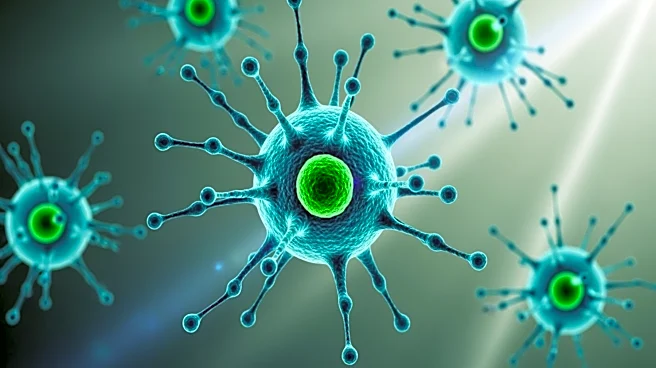
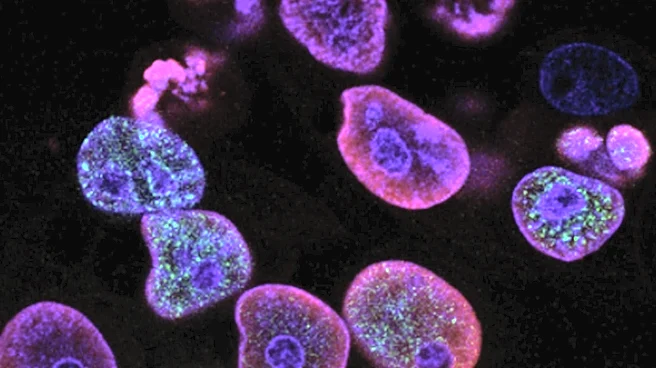
Researchers at the MRC Laboratory of Molecular Biology, led by Leo James, PhD, and Tyler Rhinesmith, PhD, have identified a novel intracellular pathway called antibody-directed xenophagy (ADX) that helps protect against viral and bacterial infections.
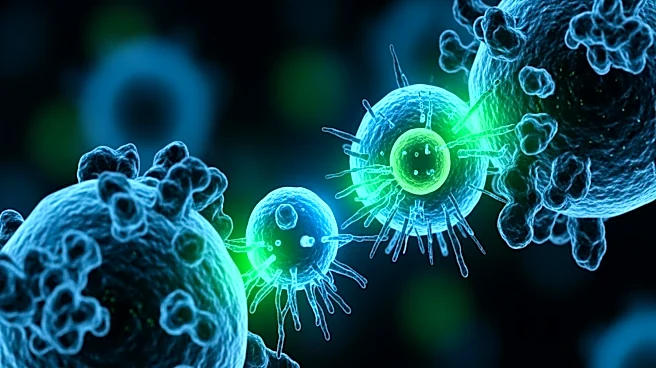
This pathway involves the protein TRIM21, which binds to antibody-coated pathogens inside cells, triggering their degradation. The study demonstrated that ADX can effectively restrict the growth of intracellular pathogens like Salmonella and adenoviruses. The findings suggest that TRIM21's ability to target diverse pathogens could be leveraged for developing new therapeutic strategies.
Why It's Important?
The discovery of the ADX pathway has significant implications for medical research and treatment of infections. By understanding how TRIM21 facilitates the degradation of pathogens within cells, scientists can explore new therapeutic approaches that enhance this natural defense mechanism. This could lead to the development of antibody or small molecule therapies that mark pathogens for destruction once they enter cells. The versatility of TRIM21 in targeting various pathogens highlights its potential as a universal strategy for infection control, which could revolutionize how infections are treated and managed.
What's Next?
Future research will focus on further understanding the mechanisms of ADX and exploring its potential applications in medicine. Scientists aim to investigate other proteins that may stimulate ADX and assess the limitations of TRIM21's function. The development of therapies that enhance ADX could provide a new line of defense against infections, particularly for pathogens that evade traditional immune responses. Continued research in this area could lead to significant advancements in the treatment of infectious diseases, potentially improving patient outcomes and reducing the burden of infections globally.