



What's Happening?
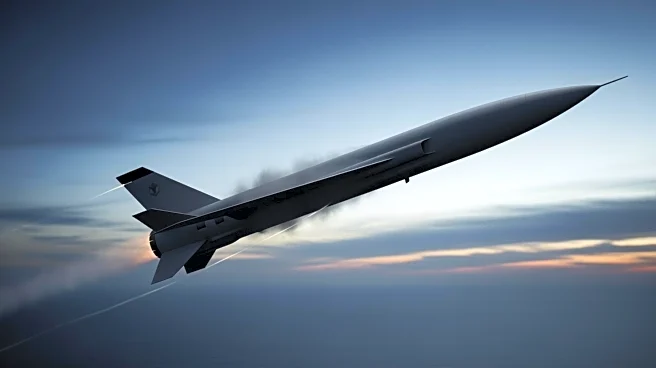
North Korea has announced the successful test of long-range strategic cruise missiles, aimed at enhancing its nuclear deterrence capabilities. This development follows recent progress in the construction of North Korea's first nuclear-powered submarine.
The missile tests, which are not banned by U.N. Security Council resolutions, pose a threat due to their maneuverability and low-altitude flight paths, making them difficult to detect. The tests come ahead of North Korea's ruling Workers' Party congress, where leader Kim Jong Un may outline new strategies in response to U.S. relations.
Why It's Important?
The missile tests underscore North Korea's ongoing efforts to expand its military capabilities and assert its strategic position. This development is significant for U.S. and South Korean security, as the missiles could potentially target U.S. warships and aircraft carriers. The tests also highlight the challenges in diplomatic relations, as North Korea continues to develop its arsenal despite international sanctions and calls for denuclearization. The situation could influence U.S. foreign policy and military strategy in the region.
What's Next?
Attention will turn to the upcoming Workers' Party congress, where North Korea may announce new policies or military advancements. The international community, particularly the U.S. and South Korea, will be monitoring these developments closely. Potential diplomatic engagements or increased military readiness could follow, depending on North Korea's actions and statements during the congress.