

What's Happening?
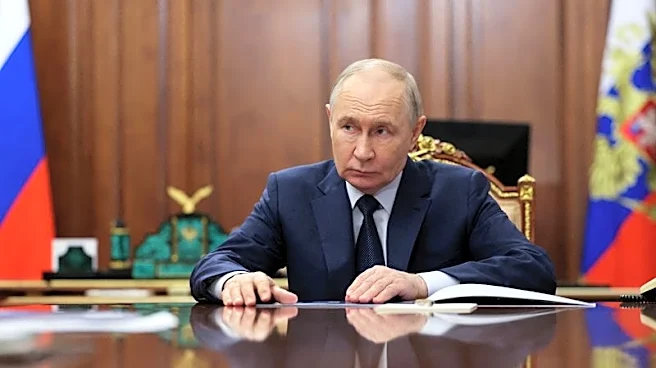
Russia's economy, under the leadership of President Vladimir Putin, is experiencing significant challenges despite high oil prices. The economy contracted in the first two months of the year, with manufacturing, industrial production, and construction
all in negative territory. This downturn comes after Russia managed to stabilize its economy post-2022 recession through stringent controls and increased defense spending. The Kremlin has imposed strict limits on capital movement, pressured exporters to convert foreign currency into rubles, and restricted foreign investors. Additionally, taxes have been raised to finance full mobilization, pushing many small and medium enterprises to the brink of closure. Inflation is currently at 5.9%, and the strong ruble has made Russian exports more expensive globally.
Why It's Important?
The contraction of Russia's economy, despite high oil prices, highlights the unsustainability of its current economic policies. The restrictions on capital movement and increased taxes are stifling business operations, particularly for small and medium enterprises. This economic strain could lead to further instability within Russia, affecting global markets and geopolitical dynamics. The situation also underscores the impact of Western sanctions and the challenges of maintaining economic stability in a wartime context. The broader implications include potential shifts in global oil markets and increased pressure on international relations, particularly with countries dependent on Russian exports.
What's Next?
Russia may continue to face economic challenges as it navigates the consequences of its wartime policies. The Kremlin's efforts to suppress information and control the narrative could lead to further domestic unrest and international scrutiny. The ongoing labor shortage, exacerbated by the war in Ukraine, may hinder economic recovery efforts. Additionally, the global community will likely monitor Russia's economic strategies closely, with potential adjustments in sanctions or diplomatic relations based on Russia's actions. The future of Russia's economy will depend on its ability to adapt to these challenges and the international response to its policies.
Beyond the Headlines
The economic situation in Russia raises ethical and legal questions about the use of coercive economic measures in wartime. The suppression of information and media control by the Kremlin limits transparency and accountability, posing challenges for international observers. The long-term impact on Russian society, particularly the business community and workforce, could lead to significant cultural and economic shifts. The situation also highlights the complexities of balancing national security with economic stability, a challenge faced by many nations in conflict.