





What's Happening?
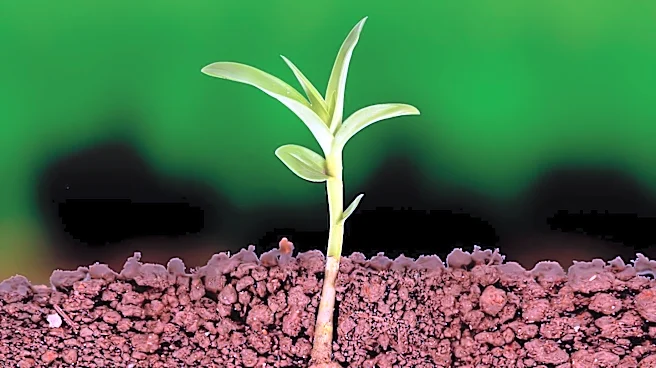
Scientists are employing ecoacoustics, the study of soundscapes to gauge ecosystem health, to explore the hidden world beneath our feet. This emerging field involves burying acoustic probes and hydrophones in the soil to record sounds made by various
subterranean organisms, such as earthworms, ants, and beetle larvae. Unlike traditional methods that require manual sampling and laboratory analysis, passive acoustic monitoring allows for continuous data collection over extended periods and across multiple locations. Early findings suggest a correlation between the complexity and diversity of these underground soundscapes and the overall health of the soil. For instance, researchers have observed post-midnight peaks in acoustic activity when earthworms are most active and higher sound diversity in rewilded grasslands compared to intensively grazed cattle pastures. This approach builds on previous successes in understanding marine and bat ecosystems through passive acoustic monitoring.
Why It's Important?
The development of soil ecoacoustics offers a potentially transformative tool for environmental monitoring and conservation efforts in the U.S. and globally. Healthy soil is fundamental to agricultural productivity, biodiversity, and climate regulation, yet traditional assessment methods are often labor-intensive, costly, and provide only snapshots of soil conditions. By providing a non-invasive, continuous, and scalable method for monitoring soil health, ecoacoustics could enable more effective tracking of ecosystem recovery initiatives and the impact of land management practices. This could lead to better-informed decisions for farmers, conservationists, and policymakers, ultimately supporting more sustainable land use and food security. The ability to detect subtle changes in soil soundscapes could serve as an early warning system for environmental degradation or, conversely, indicate successful restoration efforts, benefiting both ecological integrity and economic stability in agricultural regions.
What's Next?
The field of soil ecoacoustics is still in its nascent stages, with ongoing efforts to refine methodologies and address challenges. Researchers are actively working to build comprehensive libraries of soil faunal sounds to accurately identify the sources of recorded signals. This involves controlled experiments, such as listening to earthworms in soundproof habitats, to confirm their unique acoustic signatures. Further research is also focused on understanding confounding factors like soil type and moisture, which can affect sound transmission and recording accuracy. The long-term vision includes the potential development of a 'Soil Sound Surveillance System' (SOSOSUS), a network of buried sensors that could continuously monitor subterranean activity across vast landscapes. Such a system could provide unprecedented insights into the health and recovery of ecosystems, guiding future conservation strategies and land management policies.
Beyond the Headlines
Beyond its practical applications, soil ecoacoustics challenges our anthropocentric understanding of nature by revealing a vibrant, unseen world beneath our feet. Just as bioacoustics demystified the complex sonic lives of whales and bats, this new frontier invites us to consider the 'experience of an earthworm' and the intricate ecological processes occurring in the soil. This shift in perspective can foster a deeper appreciation for the interconnectedness of ecosystems and the often-overlooked contributions of soil organisms to planetary health. Ethically, it underscores the importance of preserving these subterranean environments, recognizing their intrinsic value beyond their utility to humans. Culturally, it could inspire new narratives and artistic interpretations of the natural world, enriching our collective understanding and promoting a more holistic approach to environmental stewardship. The 'unearthing' of these soundscapes could fundamentally alter how we perceive and interact with the ground beneath us.