



What's Happening?
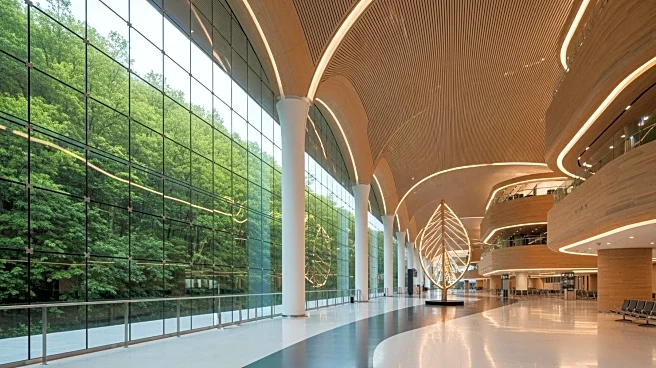
The Lokapriya Gopinath Bardoloi International Airport in Guwahati has inaugurated a new terminal, marking India's first nature-themed airport. The terminal, designed to handle 13.1 million passengers annually, is part of a Rs 5,000-crore project aimed
at transforming the airport into a key aviation hub for the northeast and a gateway to Southeast Asia. The terminal's design draws inspiration from Assam's biodiversity and cultural heritage, featuring bamboo-inspired interiors and Kaziranga-themed landscapes. The project, developed by Guwahati International Airport Ltd and operated by Adani Airport Holdings Ltd, includes advanced technology and sustainability features, such as DigiYatra-enabled passenger processing and smart check-in systems. The transition to the new terminal will begin in February, with full operations expected by March.
Why It's Important?
The new terminal at Guwahati Airport is significant for several reasons. It enhances regional connectivity, serving as a critical hub for the eight northeastern states of India. This development is expected to boost both domestic and international travel, supporting economic growth and tourism in the region. The terminal's design, which incorporates local cultural elements and sustainable construction practices, sets a new standard for airport architecture in India. By integrating modern technology and passenger-centric features, the terminal aims to improve the travel experience and operational efficiency. The project also highlights the potential for infrastructure development to reflect and promote regional identity and heritage.
What's Next?
As the new terminal becomes operational, it is expected to significantly increase passenger traffic and cargo handling capacity at Guwahati Airport. Future plans include integrated domestic and international cargo facilities, which will further strengthen regional supply chains. The airport's enhanced capabilities are likely to attract more airlines and routes, increasing connectivity to key destinations. The focus on sustainability and local culture may inspire similar projects across India, promoting eco-friendly and culturally sensitive infrastructure development. Stakeholders, including local businesses and tourism operators, are likely to benefit from the increased economic activity and improved accessibility.