



What's Happening?
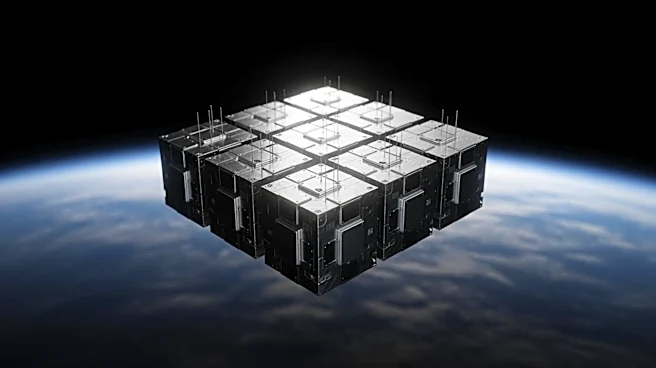
NASA has successfully launched a CubeSat mission named the Climatology of Anthropogenic and Natural VLF wave Activity in Space (CANVAS) to study radio waves in space. The mission, which took off on April 7, 2026, aboard a Minotaur IV rocket from Vandenberg
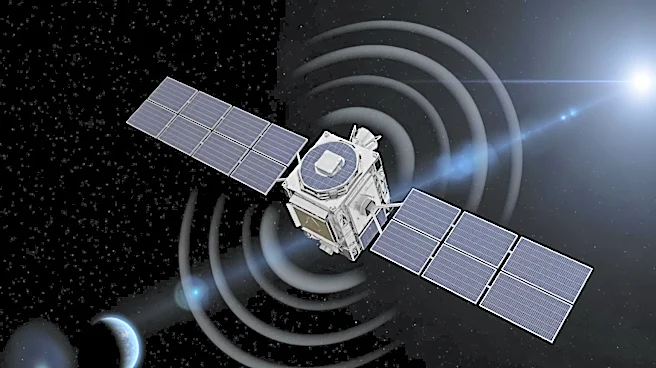
Space Force Base in California, is part of the U.S. Department of War's Space Test Program S29A. The CubeSat is designed to measure very low frequency (VLF) radio waves that originate from lightning and ground-based transmitters, assessing how these waves travel through the ionosphere and into the magnetosphere. This data is crucial for understanding how these waves influence high-energy electrons in the Earth's magnetosphere, which can affect space weather and potentially impact both space and ground-based infrastructure.
Why It's Important?
The CANVAS mission is significant as it provides insights into space weather phenomena, which can have profound effects on satellite operations, communication systems, and power grids on Earth. By understanding how VLF waves interact with the Earth's magnetosphere, scientists can improve models that predict space weather events. This knowledge is vital for protecting satellites and other space assets from harmful radiation and ensuring the safety of astronauts. Additionally, the mission supports NASA's educational goals by involving students and faculty in hands-on space research, fostering the next generation of scientists and engineers.
What's Next?
Over the next year, CANVAS will utilize its onboard instruments to collect and analyze data on VLF waves. The mission will compare its findings with global lightning data to conduct climatological studies on wave propagation. This research will enhance the understanding of space weather dynamics and contribute to the development of more accurate predictive models. The success of CANVAS could lead to further CubeSat missions aimed at exploring other aspects of the near-Earth space environment.