
What's Happening?
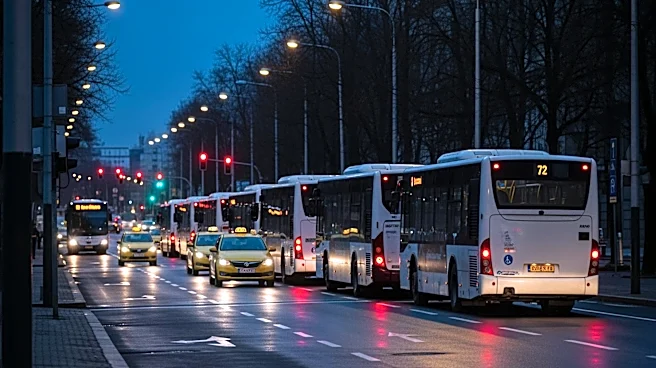
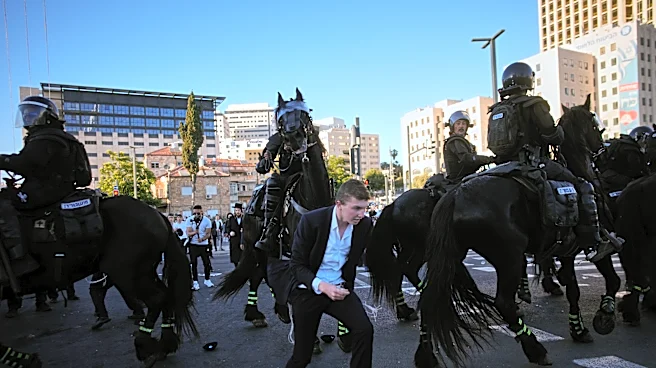
In Israel, tens of thousands of ultra-Orthodox protesters have taken to the streets, blocking roads and trains in major cities such as Jerusalem and Tel Aviv. The demonstrations are in response to the Israeli military's push to extend mandatory service,
which currently exempts ultra-Orthodox men who study in religious seminaries. This exemption is under threat due to severe military personnel shortages. The protests have led to significant disruptions, with highways closed and public transportation halted. The ultra-Orthodox community, which constitutes about 13% of Israel's population, has historically been exempt from military service, a policy dating back to the state's founding in 1948. However, the Israeli Supreme Court deemed these exemptions illegal in 2017, although they remain in place due to government delays.
Why It's Important?
The protests highlight a significant societal divide in Israel, where military service is seen as a rite of passage for most Jewish citizens. The ultra-Orthodox community's resistance to military service is straining Prime Minister Benjamin Netanyahu's coalition, as ultra-Orthodox parties have withdrawn their support, potentially leading to early elections. The issue underscores tensions between secular and religious segments of Israeli society, with many Israelis frustrated by the exemptions and government stipends provided to seminary students. The military's need for personnel is critical, given Israel's ongoing military engagements in Gaza, Lebanon, Syria, and its conflict with Iran.
What's Next?
The political ramifications of the protests could be significant, potentially leading to early elections if the coalition government collapses. The Israeli government may need to find a compromise to address the military's personnel needs while respecting the religious convictions of the ultra-Orthodox community. The situation could also prompt further legal challenges or legislative changes regarding military exemptions. The outcome will likely influence Israel's domestic policy and its approach to balancing religious freedoms with national security requirements.
Beyond the Headlines
The protests reflect deeper cultural and ethical questions about the role of religion in state affairs and the balance between individual rights and national duties. The ultra-Orthodox community's fear of secular influence through military service highlights the broader challenge of integrating diverse cultural identities within a unified national framework. The situation also raises questions about the sustainability of current military policies and the potential need for reform to accommodate Israel's changing demographic landscape.