






What's Happening?
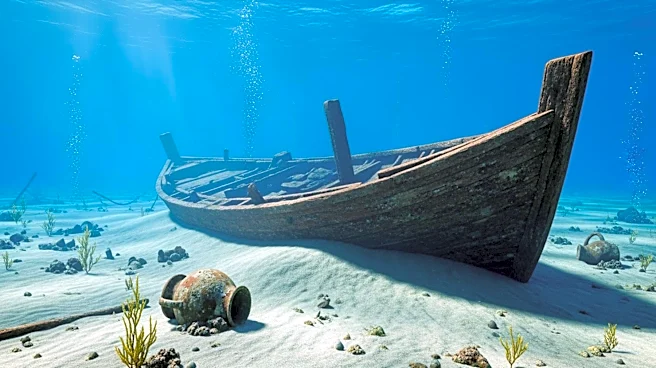
Spanish archaeologists have documented over 30 shipwrecks in the Bay of Gibraltar, a significant maritime site that has seen vessels from various eras and nations. The University of Cádiz, leading the three-year Project Herakles, identified 151 archaeological
sites, including 134 shipwrecks. These findings span from a Punic era ship dating back to the fifth century BC to vessels from the early modern period. The bay, a strategic maritime crossroads, has been a passage for ships from Phoenician, Roman, British, Spanish, Venetian, and Dutch origins. The project aims to preserve these sites, threatened by port development and climate change, by creating virtual models and raising public awareness.
Why It's Important?
The discovery of these shipwrecks provides invaluable insights into the historical maritime activities in one of the world's most strategic waterways. This research highlights the cultural and economic exchanges that occurred through these routes, offering a deeper understanding of historical trade, exploration, and conflict. The preservation of these sites is crucial as they face threats from modern development and environmental changes. By documenting and sharing these findings, the project not only preserves history but also educates the public, fostering a greater appreciation for maritime heritage and the need for its protection.
What's Next?
The researchers hope for support from the Andalucían regional government and Spain's culture ministry to protect these sites. The ongoing threat from climate change, such as rising sea levels and invasive algae, necessitates immediate action to safeguard these archaeological treasures. The team plans to continue their documentation efforts and expand public engagement through virtual experiences, aiming to create a demand for the preservation of these historical sites.
Beyond the Headlines
The project underscores the importance of understanding maritime history in the context of cultural identity and heritage. The findings could influence future archaeological methods and conservation strategies, emphasizing the need for interdisciplinary approaches in preserving underwater cultural heritage. This initiative also highlights the role of technology in archaeology, using virtual reality to bring historical discoveries to a broader audience.