



What's Happening?
Senator Kevin Cramer (R-North Dakota) has expressed significant concern regarding President Trump's standing in rural and agricultural regions of the United States. According to Cramer, President Trump is facing 'serious trouble in farm country' due to the adverse
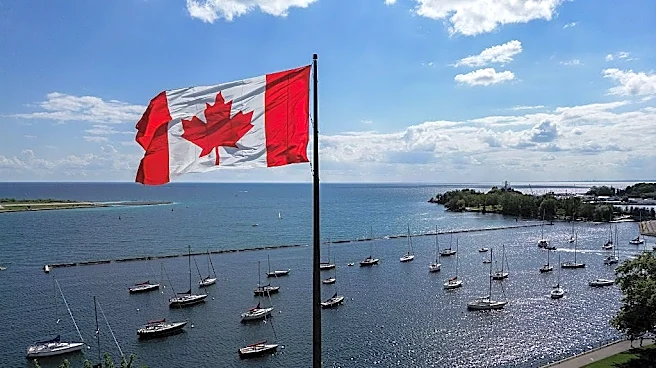
effects of his administration's policies. These issues include disruptions to fertilizer supply chains caused by conflict with Iran, leading to higher prices, and trade disputes with Canada. Specifically, President Trump's push to allow 300,000 metric tons of tariff-free imported beef has alienated many farm and ranching communities. Additionally, tariffs imposed on Canada have negatively impacted North Dakota's largest export market. These economic pressures are contributing to what some are calling a 'second farm crisis' or 'Farmageddon,' with American farmers experiencing their worst financial period since the 1980s. The American Farm Bureau Federation projects substantial losses for farmers in 2026 and 2027.
Why It's Important?
The declining support for President Trump in rural and agricultural areas carries significant political implications for the Republican Party, particularly heading into the 2026 midterms. These regions, which overwhelmingly supported President Trump in 2024, are now bearing the brunt of his trade and foreign policy decisions. The discontent is concentrated in key states such as Maine, New Hampshire, Michigan, Ohio, Alaska, Iowa, Wyoming, and North Dakota, which are crucial for control of the Senate. If Democrats manage to flip Republican-held seats in states like Ohio and Iowa, while retaining Michigan, they could secure the four seats needed to gain control of the Senate. The economic hardship faced by farmers, including rising input costs and projected financial losses, could translate into a significant shift in voting patterns, challenging the Republican Party's traditional base of support in these areas. This situation highlights how specific economic policies can directly impact political landscapes and electoral outcomes.
What's Next?
The growing dissatisfaction in farm country is expected to intensify the political challenges for Republicans in the upcoming 2026 midterm elections. Lawmakers from agricultural states, including Senators Susan Collins (R-Maine) and John Barrasso (R-Wyoming), and Iowa Rep. Ashley Hinson, have already voiced concerns about the impact of current policies on their constituents. This indicates a potential for increased internal pressure within the Republican Party to address the economic grievances of rural voters. The Democratic Party is likely to capitalize on this discontent, with candidates like Iowa State Rep. Josh Turek framing the situation as a 'second farm crisis.' The political landscape in states with significant agricultural sectors will be closely watched, as any shift in voter sentiment could have a decisive impact on the balance of power in the Senate. The ongoing economic struggles of farmers will likely remain a central theme in political discourse and campaigning leading up to the midterms.
Beyond the Headlines
The current situation in rural America underscores a deeper tension between national foreign policy and trade objectives and their localized economic consequences. While broader geopolitical strategies, such as those concerning Iran and Canada, are designed to serve national interests, their implementation can inadvertently create severe economic distress for specific sectors, like agriculture. This highlights the complex interplay between international relations, trade agreements, and domestic economic stability. The 'Farmageddon' scenario also raises questions about the long-term viability of American farming communities under fluctuating policy environments and the need for robust support systems to mitigate such impacts. Furthermore, it reveals a potential vulnerability for political parties that rely heavily on specific demographic bases, as economic hardship can erode loyalty and lead to significant political realignments, even in traditionally strongholds.