
What's Happening?
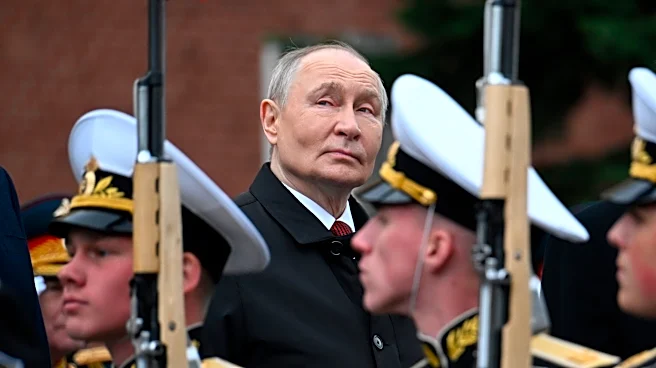
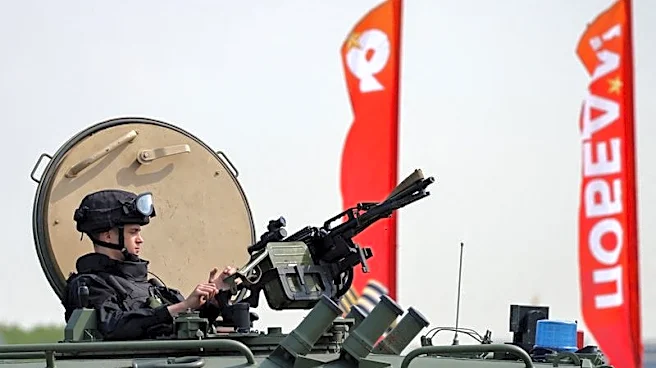
Russia conducted its annual Victory Day parade in Moscow, commemorating the defeat of Nazi Germany in World War II. This year's event was scaled back due to security concerns, with no tanks or heavy weapons
displayed, aside from a flyover of combat jets. President Vladimir Putin addressed the parade, emphasizing Russia's moral strength and unity. The parade's format change was attributed to the 'current operational situation' and potential threats from Ukraine. The event remains a significant secular holiday in Russia, reflecting on the Soviet Union's sacrifices during the war.
Why It's Important?
The downsized parade reflects ongoing tensions between Russia and Ukraine, as well as broader geopolitical dynamics. Victory Day is a key moment for Russia to showcase military strength and rally national support, particularly amid the ongoing conflict in Ukraine. The absence of heavy weaponry at the parade highlights the strain on Russia's military resources and the impact of the conflict. The event underscores the enduring significance of World War II in Russian national identity and the government's efforts to maintain public morale and support for its military actions.
What's Next?
The scaled-back parade may signal a shift in Russia's approach to public military displays, potentially influenced by resource constraints and security concerns. The ongoing conflict with Ukraine and international responses will continue to shape Russia's military and political strategies. Observers will watch for any changes in Russia's military posture and domestic policies as the government navigates these challenges. The situation remains fluid, with potential implications for regional stability and international relations.