



What's Happening?
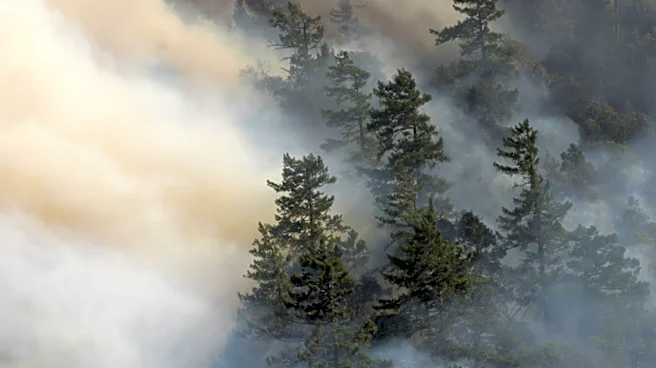
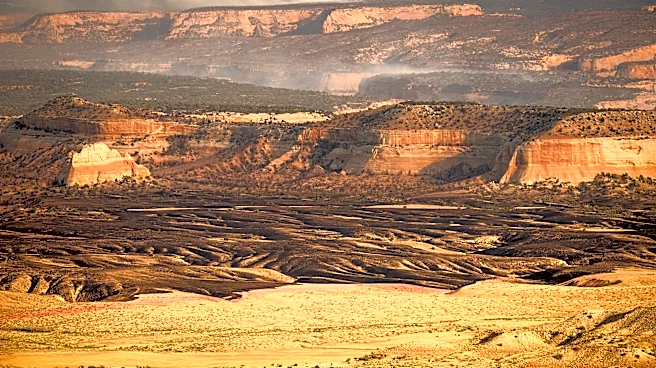
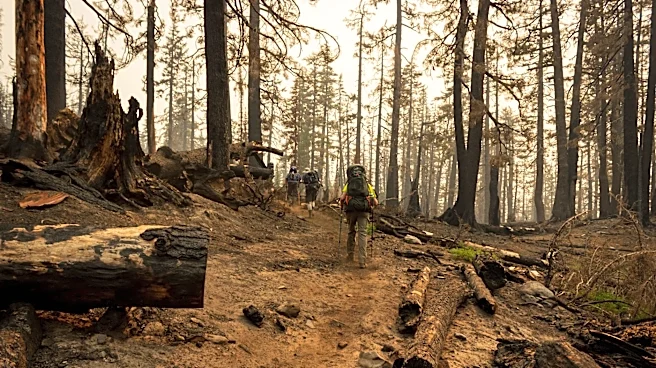
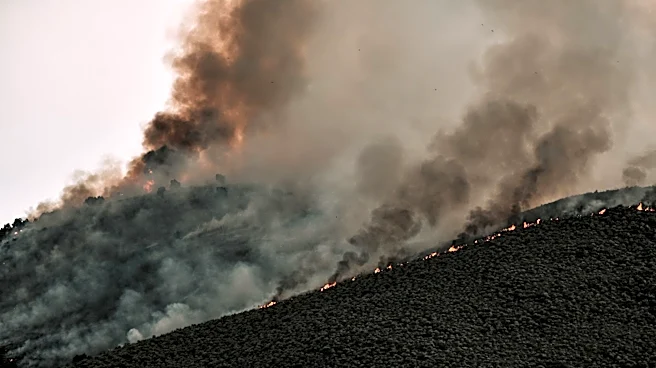
The Western U.S. is experiencing its highest wildfire alert level as fires have scorched four million acres. The National Interagency Fire Center in Boise, Idaho, has raised the National Preparedness Level to 5, indicating that all available resources
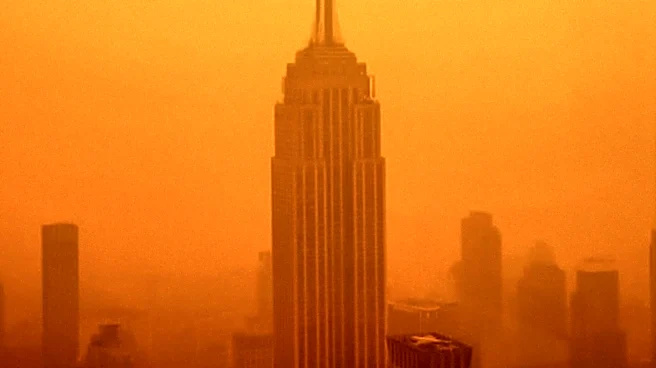
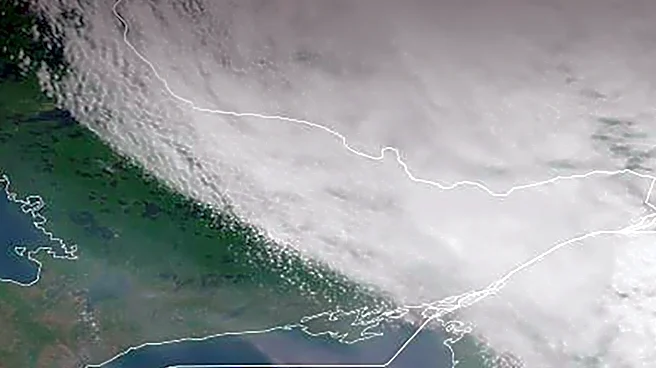
are deployed. The situation is exacerbated by hazardous smoke affecting air quality across the region. International aid is being sought, with elite firefighters from Australia expected to assist. The smoke and toxins from the fires pose significant health risks, particularly in Oregon, where air quality has been severely impacted.
Why It's Important?
The escalation to Preparedness Level 5 highlights the critical state of wildfire management in the U.S., with resources stretched thin and international assistance required. The fires not only threaten immediate areas but also have broader implications for public health due to smoke and toxins. This situation underscores the need for robust wildfire management strategies and highlights the impact of climate change on fire frequency and intensity.
What's Next?
With resources already fully deployed, any new fires could pose significant challenges. The U.S. may need to enhance its firefighting capabilities and infrastructure to better manage future incidents. Additionally, the ongoing situation may prompt further international collaboration and support. As the fire season progresses, particularly in California, the need for effective management and mitigation strategies will be crucial.