










What's Happening?
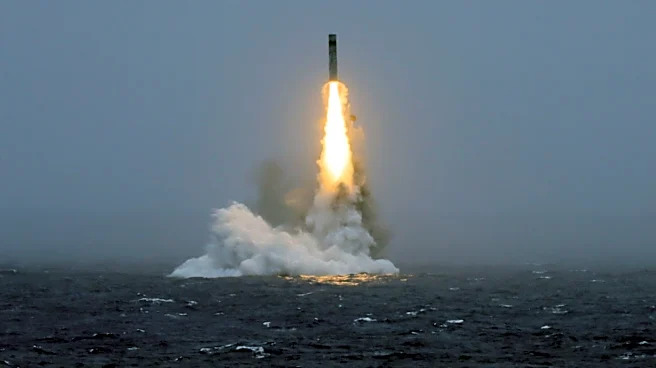
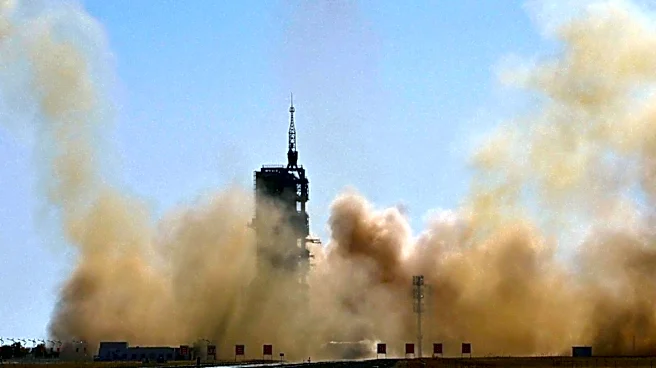
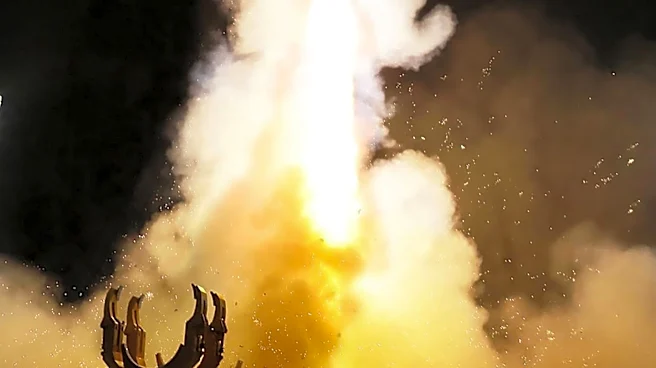
China conducted a ballistic missile test from a nuclear-powered submarine into the Pacific Ocean on July 6, providing the United States with only a few hours' notice. The U.S. State Department criticized the lack of detail in China's notification, which
fell short of the standards expected from permanent members of the United Nations Security Council. The test has raised concerns among the U.S., Japan, Australia, New Zealand, and Taiwan, especially given China's rapid and opaque nuclear weapons buildup. The missile, likely the JL-3, could potentially reach the continental United States from Chinese coastal waters. China has described the launch as a routine military training exercise, not aimed at any specific country.
Why It's Important?
The missile test underscores growing tensions between China and the U.S., particularly in the realm of nuclear arms control. The lack of transparency and communication from China could exacerbate regional security concerns and strain diplomatic relations. The U.S. has been urging China to engage in discussions on strategic stability and arms control, but China has been resistant, citing the larger U.S. nuclear arsenal. This development could impact U.S. defense strategies and its commitments to allies in the region, potentially leading to increased military readiness and diplomatic efforts to address the perceived threat.
What's Next?
The U.S. is likely to continue pressing China for more transparency and engagement in arms control discussions. There may be increased diplomatic efforts to address the security concerns raised by the missile test. The situation could lead to further military and strategic adjustments by the U.S. and its allies in the region. Additionally, the international community may call for more stringent measures to ensure compliance with existing arms control agreements.