





What's Happening?
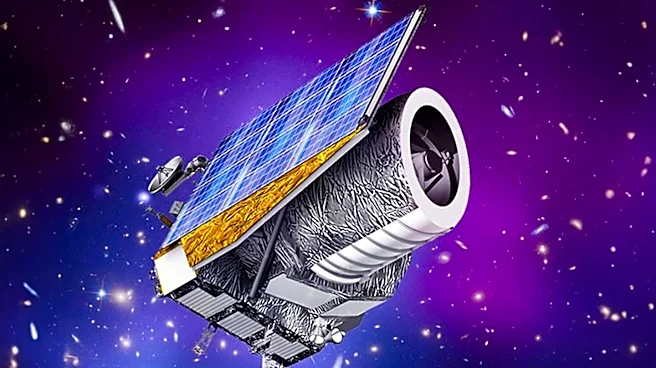
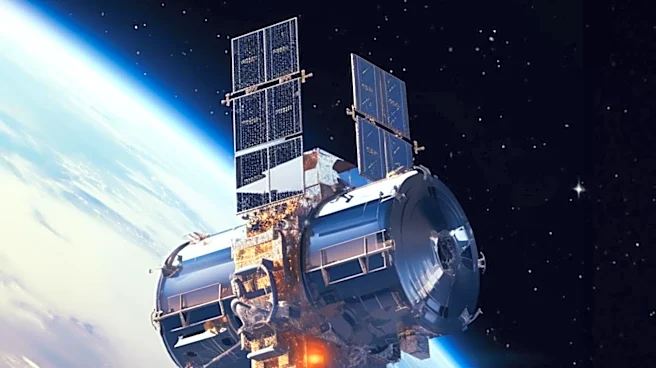
The Federal Communications Commission (FCC) has approved a test satellite by Reflect Orbital, a California-based company, to explore the feasibility of reflecting sunlight back to Earth using a giant space mirror. The satellite, named Earendil-1, aims
to test the concept of 'sunlight on demand' by redirecting sunlight to specific locations on Earth. The project has sparked significant debate, with critics raising concerns about potential light pollution, interference with astronomical observations, and environmental impacts. The approval has been criticized for bypassing comprehensive environmental assessments, with concerns about the governance and regulatory oversight of such space technologies.
Why It's Important?
The project represents a significant step in the commercialization of space technologies, with potential applications in agriculture, emergency response, and solar energy generation. However, the lack of regulatory oversight on optical light emissions from satellites highlights a significant gap in current space governance frameworks. The approval process has raised questions about the balance between technological innovation and environmental stewardship, as well as the role of federal agencies in regulating emerging space technologies. The outcome of this test could influence future policies and regulations regarding space-based technologies and their impact on Earth.
What's Next?
The Earendil-1 mission will serve as an initial test to assess the practicality of reflecting sunlight from space. The results could inform future developments and regulatory decisions regarding the deployment of similar technologies. Ongoing discussions among stakeholders, including astronomers, environmentalists, and policymakers, are expected to address the broader implications of such projects. The scientific community continues to advocate for comprehensive assessments of the environmental and societal impacts of space technologies, urging for a more coordinated regulatory approach.