



What's Happening?
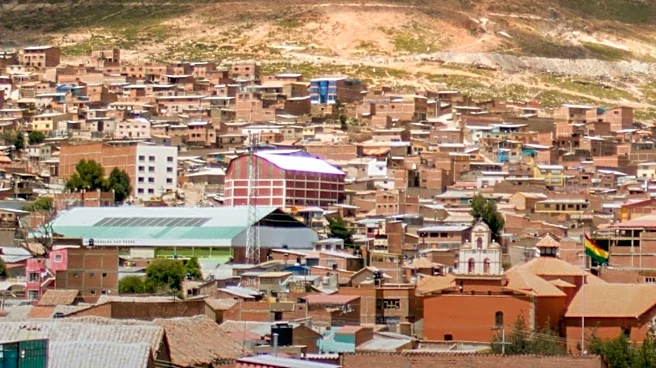
The Pan American Health Organization (PAHO) hosted a delegation from Bolivia’s Ministry of Health and Sports in Washington, D.C., for a technical exchange aimed at strengthening national capacities for implementing International Health Regulations (IHR).
The five-day visit, from November 2 to 6, focused on enhancing mechanisms for the timely detection, assessment, and notification of potential public health risks. Teams reviewed procedures for identifying, assessing, and reporting unusual public health events, including those detected through disease surveillance and community-based event surveillance. A key focus was the application of the IHR Annex 2 decision instrument to determine if an event should be reported to the World Health Organization (WHO), with plans to expand its use across surveillance units and laboratories. The visit also addressed coordination mechanisms among Bolivia’s National IHR Focal Point (NFP), the International Food Safety Authorities Network (INFOSAN), and national reference laboratories to facilitate timely information exchange and coordinated responses.
Why It's Important?
This collaboration is crucial for bolstering Bolivia's ability to respond effectively to public health emergencies, which has broader implications for regional health security. By strengthening early detection and notification systems, Bolivia can more rapidly identify and contain potential outbreaks, preventing their spread within the country and across international borders. The systematic application of the IHR Annex 2 decision instrument and improved coordination among various health institutions will lead to more efficient and harmonized responses. This initiative also supports the global effort to implement the International Health Regulations, which are vital for preventing and controlling the international spread of diseases. Enhanced national capacities in Bolivia contribute to a more robust regional health defense, protecting populations from emerging and re-emerging health threats.
What's Next?
Following the technical exchange, Bolivia plans to develop a national training plan to promote the systematic application of the IHR Annex 2 decision instrument across all levels of its health system. This will involve training surveillance units, laboratories, and other relevant institutions both within and beyond the health sector. The adaptation of a joint communication and notification protocol among the NFP, INFOSAN, and national reference laboratories will further streamline information exchange and coordinated responses. These steps are expected to lead to more timely and effective public health interventions in Bolivia, enhancing its preparedness and response capabilities for future health events. Continued collaboration with PAHO will likely support the implementation and evaluation of these strengthened mechanisms.
Beyond the Headlines
The initiative highlights the critical role of international cooperation in global health security. By investing in national capacities for early detection and response, PAHO and Bolivia are addressing a fundamental aspect of pandemic preparedness. This collaboration also underscores the importance of integrating various sectors, such as food safety and laboratory services, into a unified public health surveillance system. The focus on practical exercises and knowledge exchange ensures that theoretical frameworks are translated into actionable strategies, fostering a culture of preparedness and rapid response. This model of technical exchange can serve as a blueprint for other nations seeking to strengthen their adherence to international health regulations and build resilient health systems capable of managing complex public health challenges.