








What's Happening?
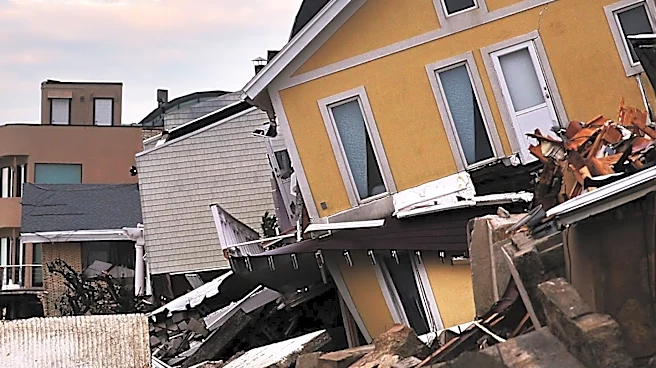
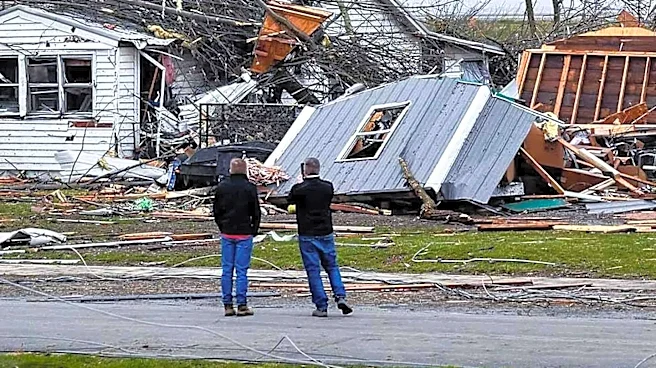
Indiana Governor Mike Braun has provided an update on the state's storm recovery efforts, approximately two months after the August 11 derecho. The state has disbursed over $32 million for disaster relief, and Governor Braun stated that recovery is progressing
according to schedule. A key focus of the ongoing recovery is addressing housing for displaced Hoosiers. The state department of homeland security is advancing a 'coordinated housing strategy' to help residents transition from the state hotel voucher program to appropriate shelter and long-term housing. Approximately 200 Indiana residents remain displaced. Concurrently, the Lake County Council approved $750,000 from the Little Calumet River Construction Fund for clean-up costs related to county-regulated drains impacted by the June 11 and August 11 storms. Indiana residents have about 10 days left to apply for FEMA assistance, with around 60,000 applications already submitted.
Why It's Important?
The ongoing storm recovery efforts are critical for the affected communities and residents in Indiana. The disbursement of over $32 million in disaster relief highlights the significant financial impact of the storms and the state's commitment to rebuilding. The focus on a coordinated housing strategy is particularly important, as stable housing is fundamental to recovery and well-being for displaced individuals. Without adequate housing, other aspects of recovery, such as employment and education, can be severely hampered. The allocation of funds by the Lake County Council for drain clean-up is essential for preventing future flooding and protecting infrastructure. The approaching deadline for FEMA assistance underscores the urgency for affected residents to seek federal support, which can provide crucial financial aid for repairs and temporary housing. The overall effort demonstrates the state's role in disaster response, resource allocation, and community resilience.
What's Next?
In the coming days, the primary focus will be on encouraging more Indiana residents to apply for FEMA assistance before the deadline. State officials, including Indiana DHS Executive Director Jonathan Whitham and FEMA Federal Coordinating Officer Darryl Dragoo, are urging residents without insurance to register for support in-person, online, or via phone. The coordinated housing strategy will continue to be implemented, with efforts to transition the approximately 200 displaced residents into more permanent housing solutions. The state is also rolling out a new program for 100% cost-covered drone assessments of waterways, with contractors writing estimates for state reimbursement, which will aid in future infrastructure resilience. The ongoing clean-up efforts in Lake County will proceed with the approved funds. The effectiveness of these next steps will be crucial in ensuring a comprehensive and timely recovery for all affected Hoosiers.
Beyond the Headlines
The long-term implications of these storm recovery efforts extend to climate resilience and infrastructure planning. The repeated impact of severe weather events, such as the derecho, highlights the increasing need for states to invest in robust infrastructure that can withstand extreme conditions. The drone assessment program for waterways, for instance, indicates a proactive approach to managing natural resources and mitigating future disaster risks. Furthermore, the coordinated housing strategy could serve as a model for other states facing similar challenges, emphasizing the importance of comprehensive support for displaced populations. This situation also brings to light the broader societal impact of climate change and the necessity for ongoing adaptation strategies. The experience gained from this recovery effort could inform future policy decisions regarding disaster preparedness, emergency response, and sustainable development in Indiana and beyond.