




What's Happening?
The U.S. Supreme Court recently ruled against Louisiana's congressional map, declaring it an unconstitutional racial gerrymander. The decision found that the state relied excessively on race when creating a second majority-Black district, violating the Equal
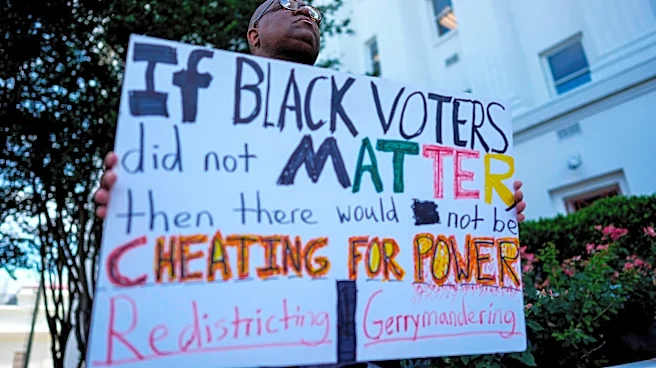
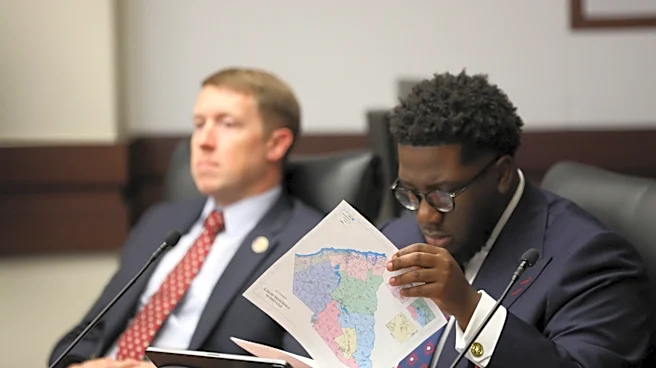
Protection Clause. This ruling follows Louisiana's attempt to redraw its districts after the 2020 census, which initially resulted in a map with only one majority-Black district despite Black residents comprising about one-third of the population. Civil rights groups challenged this map, arguing it diluted Black voting power under the Voting Rights Act. The revised map, known as SB8, added a second majority-Black district but was also contested for being predominantly race-based. The Supreme Court's decision has sparked national discussions on voting rights and redistricting, especially in Southern states where similar legal battles are ongoing.
Why It's Important?
This ruling is significant as it underscores the ongoing challenges in balancing racial representation with legal standards in redistricting. The decision could impact how states approach the creation of electoral districts, particularly in regions with significant minority populations. It highlights the tension between efforts to ensure fair representation for minority groups and the legal constraints against race-based districting. The ruling may influence future redistricting efforts and legal strategies, potentially affecting political power dynamics in states with large minority populations. It also raises questions about the effectiveness of the Voting Rights Act in its current form and the role of the judiciary in interpreting its provisions.
What's Next?
Following the Supreme Court's decision, states like Alabama are closely watching the implications for their own redistricting efforts. Alabama Republicans are currently seeking to redraw congressional districts, with legal battles focusing on whether the state's map unlawfully dilutes Black voting power. The outcome of these cases could set precedents for how states can legally consider race in redistricting. Additionally, the ruling may prompt legislative efforts to amend the Voting Rights Act to address these complex issues more clearly. Advocacy groups are likely to continue pushing for maps that they believe fairly represent minority populations, while states may seek to navigate the legal landscape to avoid similar judicial rebukes.
Beyond the Headlines
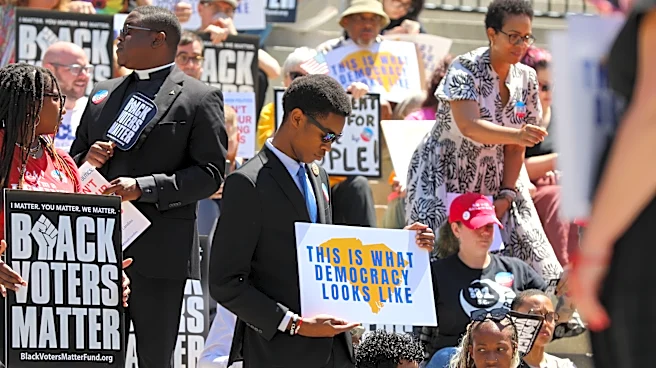
The Supreme Court's decision may have broader implications for the civil rights movement and the ongoing struggle for racial equality in the U.S. It highlights the historical and cultural significance of voting rights as a cornerstone of democracy, particularly in Southern states with a legacy of racial discrimination. The ruling could influence public discourse on race and representation, potentially leading to increased activism and advocacy for electoral reforms. It also raises ethical questions about the role of race in political representation and the balance between ensuring fair representation and adhering to constitutional principles.