


What's Happening?
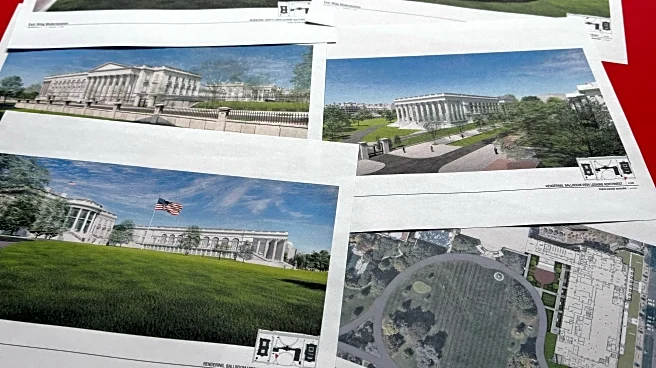
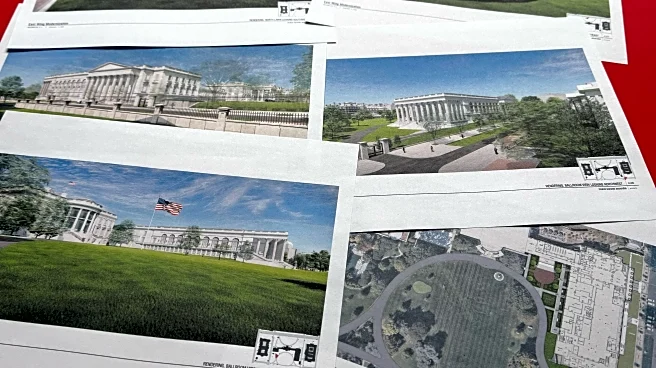
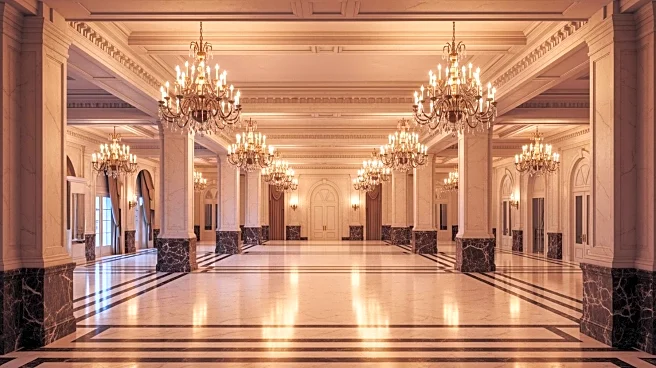
The U.S. Commission of Fine Arts, composed of appointees by President Trump, has approved a proposal to construct a new ballroom at the White House. This ballroom, intended to replace the East Wing, will be larger than the White House itself, accommodating
up to 1,000 people. The decision follows the demolition of the East Wing, which was met with criticism from lawmakers and preservationists. The ballroom is part of President Trump's vision to provide a permanent space for hosting dignitaries, eliminating the need for temporary structures on the South Lawn. The project, estimated to cost $400 million, is to be funded through private donations.
Why It's Important?
The approval of the ballroom project signifies a major architectural change to the White House, reflecting President Trump's influence on federal property development. The project has sparked debate over historical preservation and transparency in government projects, as critics argue the demolition of the East Wing was premature. The ballroom's construction could set a precedent for future modifications to national landmarks, raising questions about the balance between modernization and preservation. Additionally, the project's funding through private donations highlights the role of private capital in public infrastructure projects, which may influence future government funding strategies.
What's Next?
The National Capital Planning Commission is set to review the ballroom project in March, which will be crucial for its progression. The ongoing lawsuit by the National Trust for Historic Preservation could also impact the project's timeline, depending on the court's ruling. Public and political reactions to the project may influence future decisions on federal property developments. The outcome of these proceedings will determine whether the ballroom becomes a permanent fixture at the White House, potentially affecting how state functions are hosted in the future.