





What's Happening?
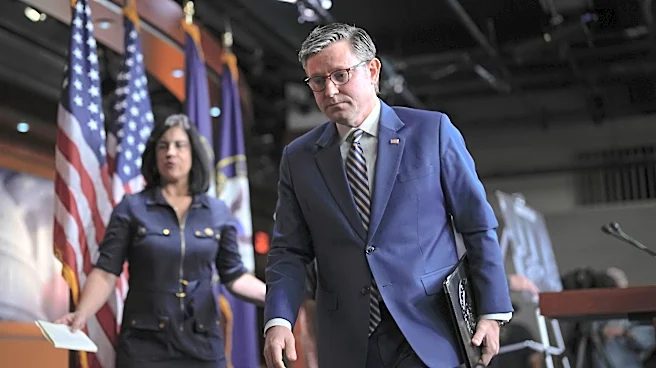
The U.S. House of Representatives has passed a short-term funding extension to maintain government operations until December 4, effectively postponing the budgetary conflict until after the November midterm elections. The continuing resolution, which
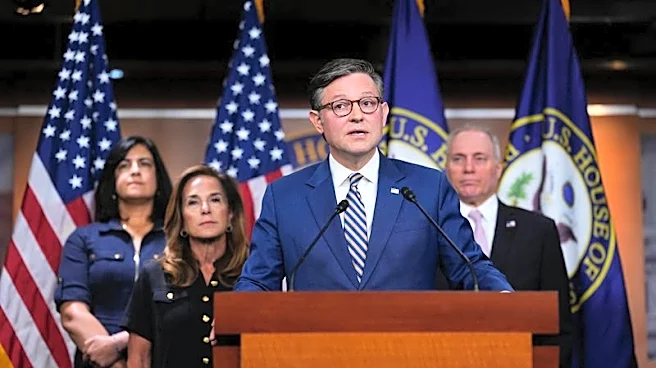
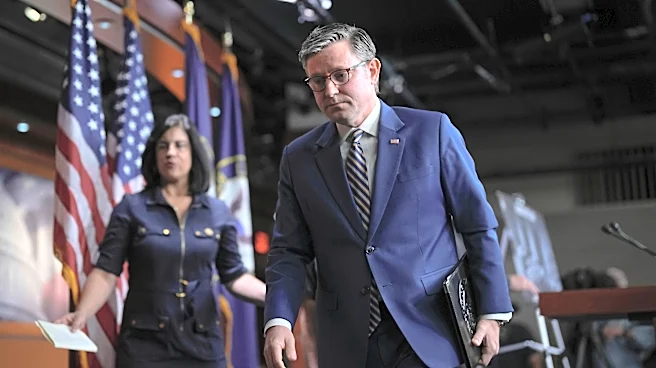
passed with a 220 to 205 vote, aims to prevent a government shutdown by extending current funding levels without additional provisions. House Speaker Mike Johnson emphasized the simplicity of the measure, which lacks controversial add-ons. The bill's passage comes as the House prepares for a five-week recess, with the Senate expected to consider the measure before its own recess. The current government funding is set to expire on September 30, necessitating this temporary solution to avoid a shutdown during the election season.
Why It's Important?
This development is significant as it reflects ongoing challenges in reaching a bipartisan agreement on government funding, highlighting the political maneuvering ahead of the midterm elections. The decision to extend funding without additional provisions underscores the urgency to avoid a shutdown, which could have negative repercussions for both parties during the campaign period. The resolution's passage also indicates a strategic move by Republicans to maintain government operations while deferring contentious budgetary debates. The outcome of this legislative action could influence voter perceptions and impact the political landscape as parties prepare for the upcoming elections.
What's Next?
The Senate is expected to take up the short-term funding bill before its August recess. Senate Majority Leader John Thune has indicated plans to bring the measure to a vote, potentially using it as a vehicle to pass further funding resolutions. The ongoing discussions in the Senate will be crucial in determining whether a longer-term funding solution can be reached. Additionally, the reconciliation process may be employed to pass funding bills with a simple majority, bypassing the need for Democratic support. The outcome of these negotiations will shape the fiscal landscape and set the stage for post-election budgetary discussions.