
What's Happening?
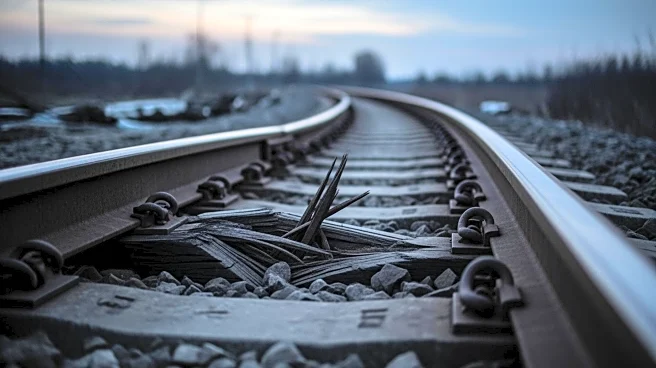
A tragic train accident occurred in southern Mexico, resulting in the deaths of at least 13 individuals and injuring 98 others. The incident took place when the Interoceanic Train, which connects the Pacific
Ocean with the Gulf of Mexico, derailed near the town of Nizanda. The train was carrying 241 passengers and nine crew members at the time of the accident. The derailment happened as the train was navigating a curve, causing significant disruption to the rail line that links the states of Oaxaca and Veracruz. The Mexican government has been developing the isthmus into a strategic corridor for international trade, with the Interoceanic Train playing a crucial role in this plan. The train service, inaugurated in 2023, is part of a broader initiative to enhance train travel and infrastructure in southern Mexico.
Why It's Important?
The derailment of the Interoceanic Train is a significant setback for Mexico's infrastructure development plans, particularly the strategic corridor intended to boost international trade. This corridor is designed to connect the Atlantic and Pacific Oceans, facilitating the movement of goods and potentially enhancing Mexico's role in global trade. The accident raises concerns about the safety and reliability of the country's rail infrastructure, which could impact investor confidence and future development projects. Additionally, the loss of life and injuries highlight the human cost of such infrastructure failures, prompting a need for improved safety measures and oversight. The incident may lead to increased scrutiny of the rail system and could influence public policy regarding transportation safety standards.
What's Next?
In response to the accident, Mexican authorities, including the secretary of the navy and the undersecretary of human rights, have been dispatched to the site to assist affected families and oversee recovery efforts. The government is likely to conduct a thorough investigation to determine the cause of the derailment and prevent future occurrences. This may involve reviewing current safety protocols and implementing stricter regulations for rail operations. The incident could also prompt discussions on the allocation of resources for infrastructure maintenance and upgrades. Stakeholders, including government officials and international trade partners, will be closely monitoring the situation to assess its impact on the strategic corridor project and Mexico's broader economic goals.